Word Explanation
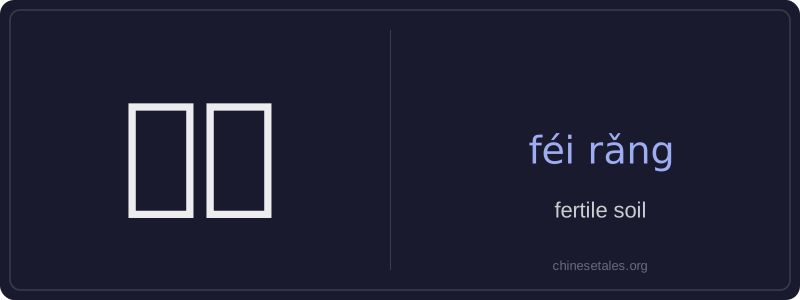
肥壤 (féi rǎng) literally combines 肥 (féi), meaning 'fertile' or 'rich'—often used for soil, compost, or nutrients—and 壤 (rǎng), meaning 'soil' or 'earth'. Together, they form a formal, literary term for 'fertile soil'—soil rich in organic matter and nutrients that supports robust plant growth. It is more commonly found in written contexts such as agricultural reports, ecological studies, or poetic descriptions than in everyday speech.
The term emphasizes natural richness and productivity, often implying suitability for farming or reforestation. Unlike colloquial alternatives like 肥沃的土壤 (féiwò de tǔrǎng), 肥壤 is concise and stylistically elevated, frequently appearing in environmental policies, scientific texts, or classical-inspired prose. It carries a positive connotation of abundance and sustainability, and is rarely used metaphorically.
Example Sentences
Related Words
国语
‘Guó yǔ’ literally means 'national language'—
无论谁
‘无论谁’ (wú lùn shéi) is a pronoun meaning
外语
‘外语’ literally means ‘outside language’ —
不对
不对 (bù duì) literally combines 不 (bù), meani
我的
我的 (wǒ de) is a possessive pronoun meaning 'my'
违规
违规 (wéi guī) literally means 'to violate rules
亲笔
‘亲笔’ literally means ‘one’s own hand’—comb
面条
‘面条’ (miàn tiáo) literally means ‘flour str