Word Explanation
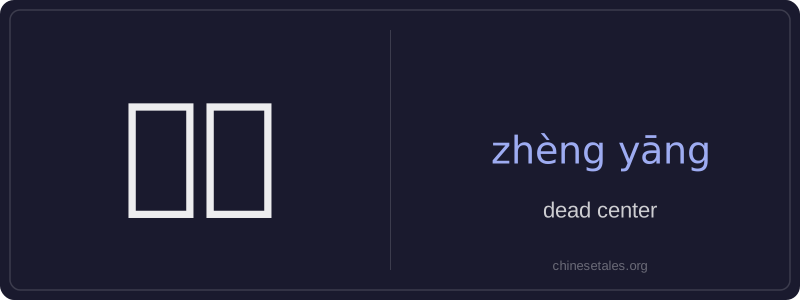
‘Zhèng yāng’ literally combines ‘zhèng’ (exact, proper, upright) and ‘yāng’ (center, middle), together meaning ‘dead center’—the precise geometric or spatial midpoint of something. It emphasizes absolute centrality, not just approximate middle position, and carries a sense of balance, focus, or importance.
This term is commonly used to describe physical locations (e.g., the center of a room, plaza, or image), but also appears metaphorically in formal or literary contexts—for instance, ‘the dead center of attention’ or ‘the heart of an issue’. It’s more precise and slightly more formal than simpler terms like ‘zhōngjiān’ (middle). You’ll often hear it in descriptions of architecture, design, traditional layouts (e.g., palace courtyards), or visual composition.
Example Sentences
Related Words
国语
‘Guó yǔ’ literally means 'national language'—
无论谁
‘无论谁’ (wú lùn shéi) is a pronoun meaning
外语
‘外语’ literally means ‘outside language’ —
不对
不对 (bù duì) literally combines 不 (bù), meani
我的
我的 (wǒ de) is a possessive pronoun meaning 'my'
违规
违规 (wéi guī) literally means 'to violate rules
亲笔
‘亲笔’ literally means ‘one’s own hand’—comb
面条
‘面条’ (miàn tiáo) literally means ‘flour str