Word Explanation
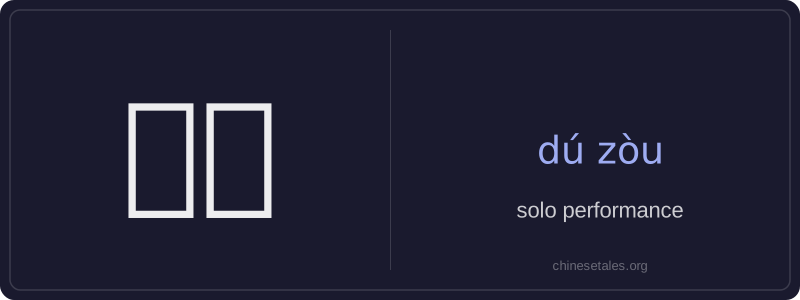
‘独奏’ literally means ‘alone + to perform (music)’ and refers to a musical performance by a single musician, without accompaniment or ensemble. The character 独 (dú) conveys ‘solitary’, ‘sole’, or ‘exclusive’, while 奏 (zòu) means ‘to play (an instrument)’ or ‘to perform music’. Together, they form a compound noun used widely in classical, jazz, and contemporary music contexts — for example, a piano独奏 or a violin独奏.
This term emphasizes both the performer’s technical skill and expressive independence. It contrasts with terms like 合奏 (ensemble playing) or 伴奏 (accompaniment). While often associated with Western instruments, it also applies to traditional Chinese instruments such as the guqin or erhu. ‘独奏’ appears in concert programs, music education settings, and competition categories, and is typically written as one word without spacing.
Example Sentences
Related Words
国语
‘Guó yǔ’ literally means 'national language'—
无论谁
‘无论谁’ (wú lùn shéi) is a pronoun meaning
外语
‘外语’ literally means ‘outside language’ —
不对
不对 (bù duì) literally combines 不 (bù), meani
我的
我的 (wǒ de) is a possessive pronoun meaning 'my'
违规
违规 (wéi guī) literally means 'to violate rules
亲笔
‘亲笔’ literally means ‘one’s own hand’—comb
面条
‘面条’ (miàn tiáo) literally means ‘flour str