Word Explanation
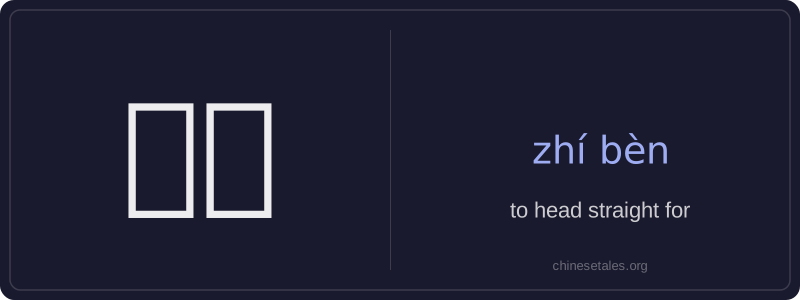
'直奔' is a compound verb meaning 'to head straight for' or 'to go directly to' a destination, without stopping or detouring. The first character 直 (zhí) means 'straight' or 'directly', emphasizing no deviation; the second character 奔 (bèn) means 'to rush toward' or 'to head for', conveying purposeful, often urgent movement. Together, they form an action-oriented verb that highlights both directionality and intention — not just going somewhere, but going there immediately and unswervingly.
This verb is commonly used in spoken and written Chinese to describe physical movement toward a specific place (e.g., a station, hospital, or home), and occasionally metaphorically for goals or targets (e.g., '直奔主题' — 'go straight to the point'). It typically follows a subject and precedes a noun phrase indicating the destination, often with no preposition needed — unlike English, which requires 'to' or 'toward'. It conveys energy, focus, and efficiency, sometimes hinting at urgency or determination.
Example Sentences
Related Words
国语
‘Guó yǔ’ literally means 'national language'—
无论谁
‘无论谁’ (wú lùn shéi) is a pronoun meaning
外语
‘外语’ literally means ‘outside language’ —
不对
不对 (bù duì) literally combines 不 (bù), meani
我的
我的 (wǒ de) is a possessive pronoun meaning 'my'
违规
违规 (wéi guī) literally means 'to violate rules
亲笔
‘亲笔’ literally means ‘one’s own hand’—comb
面条
‘面条’ (miàn tiáo) literally means ‘flour str