Word Explanation
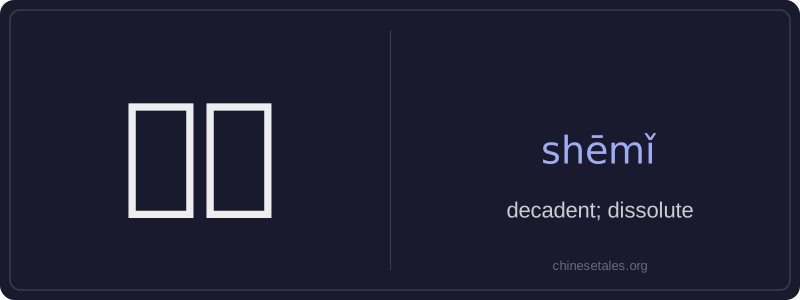
奢靡 (shēmǐ) is an adjective describing excessive luxury, wasteful extravagance, or morally decadent indulgence — often with a strong negative connotation of moral decline or social irresponsibility. The first character 奢 (shē) means 'luxurious' or 'extravagant', while 靡 (mǐ) originally meant 'to waste' or 'to decay', reinforcing the sense of reckless dissipation. Together, they form a compound that evokes not just wealth, but its corrupting misuse — think lavish banquets during famine, or rulers ignoring public welfare while living in opulence.
This word appears frequently in historical texts, political discourse, and modern critiques of consumerism or inequality. It’s more formal and literary than everyday synonyms like 浪费 (làngfèi, 'wasteful') and carries moral judgment, implying that the luxury crosses ethical boundaries. It’s rarely used neutrally; even describing a billionaire’s lifestyle as 奢靡 suggests criticism rather than admiration.
Example Sentences
Related Words
国语
‘Guó yǔ’ literally means 'national language'—
无论谁
‘无论谁’ (wú lùn shéi) is a pronoun meaning
外语
‘外语’ literally means ‘outside language’ —
不对
不对 (bù duì) literally combines 不 (bù), meani
我的
我的 (wǒ de) is a possessive pronoun meaning 'my'
违规
违规 (wéi guī) literally means 'to violate rules
亲笔
‘亲笔’ literally means ‘one’s own hand’—comb
面条
‘面条’ (miàn tiáo) literally means ‘flour str