Word Explanation
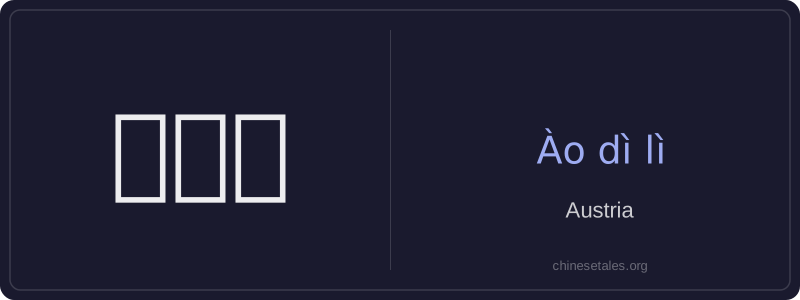
‘奥地利’ is the standard Mandarin name for the Central European country Austria. Though the three characters—奥 (Ào), 地 (dì), and 利 (lì)—individually mean ‘profound,’ ‘earth/land,’ and ‘benefit/advantage,’ respectively, their combination here is purely phonetic: the word is a transliteration of the German ‘Österreich’ (via historical Japanese pronunciation) and carries no semantic meaning derived from the characters themselves. This is common for many country names in Chinese, where sound approximation takes priority over literal meaning.
‘奥地利’ is used formally and informally in geographical, political, cultural, and travel contexts—e.g., when referring to its capital Vienna, classical music heritage (Mozart, Strauss), Alpine landscapes, or diplomatic relations. It always functions as a proper noun and requires no classifier in most syntactic positions. As with other country names, it’s often paired with words like ‘人’ (rén, ‘person’) for nationality (奥地利人, Àodìlì rén, ‘Austrian person’) or ‘语’ (yǔ, ‘language’) for language (奥地利语, Àodìlì yǔ, though note that Austrian German is usually just called 德语).
Example Sentences
Related Words
国语
‘Guó yǔ’ literally means 'national language'—
无论谁
‘无论谁’ (wú lùn shéi) is a pronoun meaning
外语
‘外语’ literally means ‘outside language’ —
不对
不对 (bù duì) literally combines 不 (bù), meani
我的
我的 (wǒ de) is a possessive pronoun meaning 'my'
违规
违规 (wéi guī) literally means 'to violate rules
亲笔
‘亲笔’ literally means ‘one’s own hand’—comb
面条
‘面条’ (miàn tiáo) literally means ‘flour str