Word Explanation
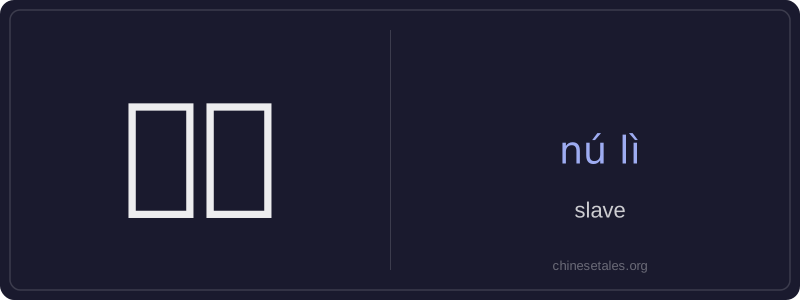
'Nú lì' literally combines 奴 (nú), meaning 'servant' or 'subordinate', and 隶 (lì), an ancient term for 'subordinate official' or 'bound person'. Together, they form a formal, historical noun meaning 'slave' — a person owned by another and deprived of personal freedom and legal rights. The word carries strong connotations of coercion, exploitation, and systemic oppression.
In modern Chinese, 'nú lì' is used almost exclusively in historical, literary, or academic contexts — such as discussions of ancient societies, colonialism, or abolition movements. It rarely appears in everyday speech to describe contemporary labor situations; using it loosely (e.g., for overworked employees) is considered hyperbolic and inappropriate. The term is neutral in grammatical gender but inherently carries moral gravity and historical weight.
Example Sentences
Related Words
国语
‘Guó yǔ’ literally means 'national language'—
无论谁
‘无论谁’ (wú lùn shéi) is a pronoun meaning
外语
‘外语’ literally means ‘outside language’ —
不对
不对 (bù duì) literally combines 不 (bù), meani
我的
我的 (wǒ de) is a possessive pronoun meaning 'my'
违规
违规 (wéi guī) literally means 'to violate rules
亲笔
‘亲笔’ literally means ‘one’s own hand’—comb
面条
‘面条’ (miàn tiáo) literally means ‘flour str