Word Explanation
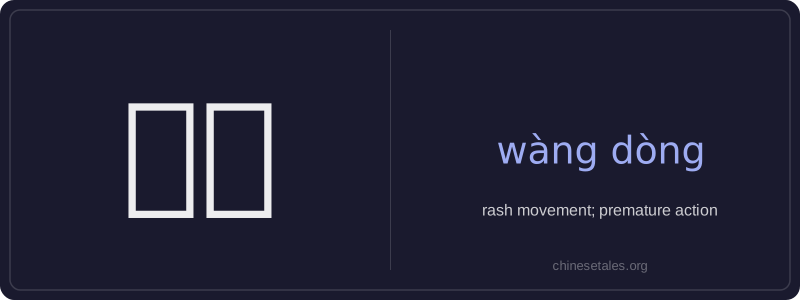
'Wàng dòng' literally combines 'wàng' (reckless, unfounded, presumptuous) and 'dòng' (to move, to act), forming a noun meaning 'rash movement' or 'premature action'. It carries a strong negative connotation, implying action taken without sufficient thought, evidence, or authority—often leading to harm or disorder. The character 妄 suggests baselessness or arrogance, while 动 emphasizes physical or procedural action; together, they evoke impulsive interference in delicate situations.
This term appears frequently in formal contexts such as medicine, governance, and safety protocols—e.g., advising against moving an injured person before professional assessment, or warning officials not to interfere hastily in complex social issues. It is rarely used in casual speech and almost never with positive intent; instead, it functions as a cautionary concept rooted in Chinese values of prudence, restraint, and respect for expertise and natural order.
Example Sentences
Related Words
国语
‘Guó yǔ’ literally means 'national language'—
无论谁
‘无论谁’ (wú lùn shéi) is a pronoun meaning
外语
‘外语’ literally means ‘outside language’ —
不对
不对 (bù duì) literally combines 不 (bù), meani
我的
我的 (wǒ de) is a possessive pronoun meaning 'my'
违规
违规 (wéi guī) literally means 'to violate rules
亲笔
‘亲笔’ literally means ‘one’s own hand’—comb
面条
‘面条’ (miàn tiáo) literally means ‘flour str