Word Explanation
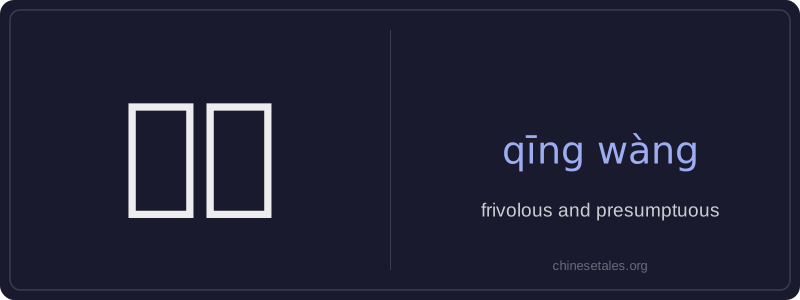
'轻妄' is a literary and somewhat formal adjective describing behavior or speech that is both frivolous—lacking seriousness, depth, or respect—and presumptuous—unjustifiably confident or arrogant, often without basis or authority. The first character 轻 (qīng) conveys lightness, superficiality, or disregard; the second 妄 (wàng) means reckless, unfounded, or presumptuous—often implying arrogance or baseless judgment. Together, they form a compound emphasizing an attitude that is not only unserious but also arrogantly overconfident.
This term appears most frequently in written Chinese—especially in essays, critiques, or moral commentary—to censure hasty judgments, disrespectful remarks, or self-important claims made without evidence or humility. It carries a strong negative connotation and implies ethical or intellectual failure, not mere carelessness. While rare in casual speech, it’s occasionally used in formal speeches or academic writing to condemn superficial confidence masquerading as wisdom.
Example Sentences
Related Words
国语
‘Guó yǔ’ literally means 'national language'—
无论谁
‘无论谁’ (wú lùn shéi) is a pronoun meaning
外语
‘外语’ literally means ‘outside language’ —
不对
不对 (bù duì) literally combines 不 (bù), meani
我的
我的 (wǒ de) is a possessive pronoun meaning 'my'
违规
违规 (wéi guī) literally means 'to violate rules
亲笔
‘亲笔’ literally means ‘one’s own hand’—comb
面条
‘面条’ (miàn tiáo) literally means ‘flour str