Word Explanation
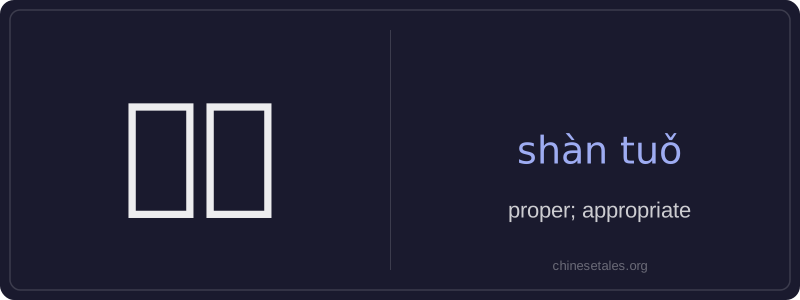
'Shàn tuǒ' is an adjective meaning 'proper,' 'appropriate,' or 'well-handled.' Though the characters appear in reverse order in pinyin (tuǒ shàn), the standard written and spoken form is 妥善, with 妥 meaning 'settled' or 'arranged' and 善 meaning 'good' or 'thorough.' Together, they convey the idea of something being handled competently, carefully, and in a way that satisfies requirements—often implying both correctness and care. It’s commonly used in formal or semi-formal contexts, especially when discussing arrangements, solutions, or responsibilities.
This word frequently appears in written Chinese—such as official notices, work reports, or news articles—and is less common in casual speech. It often modifies verbs (e.g., 妥善处理 'handle properly') or functions predicatively (e.g., 问题已妥善解决 'the issue has been properly resolved'). While it carries a positive, responsible connotation, it implies more than mere adequacy: it suggests thoughtfulness, completeness, and reliability in execution.
Example Sentences
Related Words
国语
‘Guó yǔ’ literally means 'national language'—
无论谁
‘无论谁’ (wú lùn shéi) is a pronoun meaning
外语
‘外语’ literally means ‘outside language’ —
不对
不对 (bù duì) literally combines 不 (bù), meani
我的
我的 (wǒ de) is a possessive pronoun meaning 'my'
违规
违规 (wéi guī) literally means 'to violate rules
亲笔
‘亲笔’ literally means ‘one’s own hand’—comb
面条
‘面条’ (miàn tiáo) literally means ‘flour str