Word Explanation
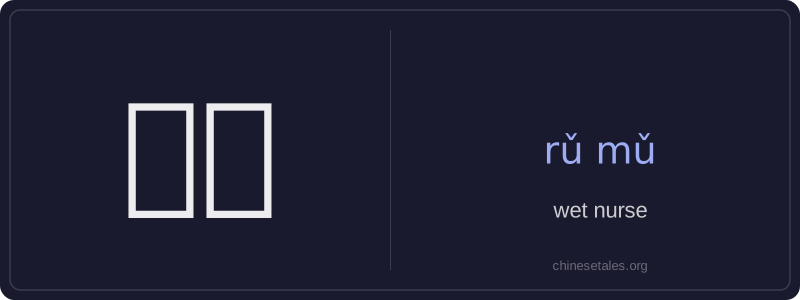
‘乳母’ (rǔ mǔ) literally combines ‘乳’ (rǔ), meaning ‘milk’ or ‘breast’, and ‘母’ (mǔ), meaning ‘mother’. Together, it refers specifically to a woman who breastfeeds and cares for another woman’s infant—commonly known in English as a ‘wet nurse’. Historically, wet nurses were employed by families who could not or chose not to breastfeed their own children, especially among royalty or affluent households in imperial China. The term carries formal, somewhat literary connotations and is rarely used in modern daily speech.
Unlike general childcare terms like ‘保姆’ (bǎomǔ, nanny), ‘乳母’ emphasizes the biological function of lactation and early infant nourishment. It appears primarily in historical texts, period dramas, or discussions of traditional childcare practices. While the role has largely been replaced by formula feeding and professional pediatric care, the word remains culturally significant for understanding family structures and social hierarchies in pre-modern Chinese society.
Example Sentences
Related Words
国语
‘Guó yǔ’ literally means 'national language'—
无论谁
‘无论谁’ (wú lùn shéi) is a pronoun meaning
外语
‘外语’ literally means ‘outside language’ —
不对
不对 (bù duì) literally combines 不 (bù), meani
我的
我的 (wǒ de) is a possessive pronoun meaning 'my'
违规
违规 (wéi guī) literally means 'to violate rules
亲笔
‘亲笔’ literally means ‘one’s own hand’—comb
面条
‘面条’ (miàn tiáo) literally means ‘flour str