Word Explanation
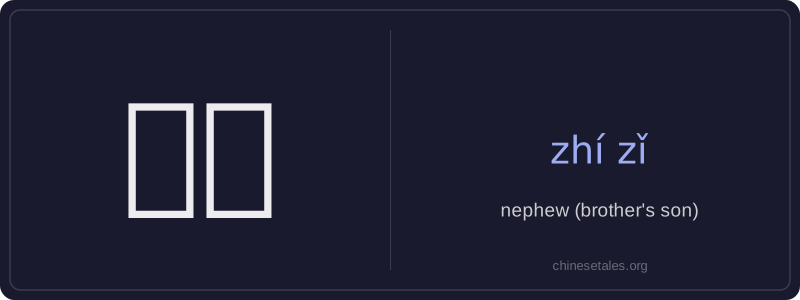
‘Zhízi’ means ‘nephew’ — specifically the son of one’s brother. The character 侄 (zhí) denotes a male relative on the paternal side, distinguishing it from 甥 (shēng), which refers to a nephew through one’s sister. The second character 子 (zǐ) is a common suffix meaning ‘son’ or ‘child’, reinforcing the familial relationship. Together, 侄子 literally conveys ‘brother’s son’ and is used exclusively for male descendants in this line.
This term reflects traditional Chinese kinship terminology, which emphasizes precise distinctions based on gender and lineage. It’s commonly used in family conversations, formal introductions, and written contexts like letters or family trees. Unlike English, where ‘nephew’ covers both brother’s and sister’s sons, Chinese requires different terms: 侄子 for brother’s son and 甥子 (shēngzi) or more commonly 甥 for sister’s son. The word carries neutral to respectful register and is appropriate in both casual and formal settings.
Example Sentences
Related Words
国语
‘Guó yǔ’ literally means 'national language'—
无论谁
‘无论谁’ (wú lùn shéi) is a pronoun meaning
外语
‘外语’ literally means ‘outside language’ —
不对
不对 (bù duì) literally combines 不 (bù), meani
我的
我的 (wǒ de) is a possessive pronoun meaning 'my'
违规
违规 (wéi guī) literally means 'to violate rules
亲笔
‘亲笔’ literally means ‘one’s own hand’—comb
面条
‘面条’ (miàn tiáo) literally means ‘flour str