Word Explanation
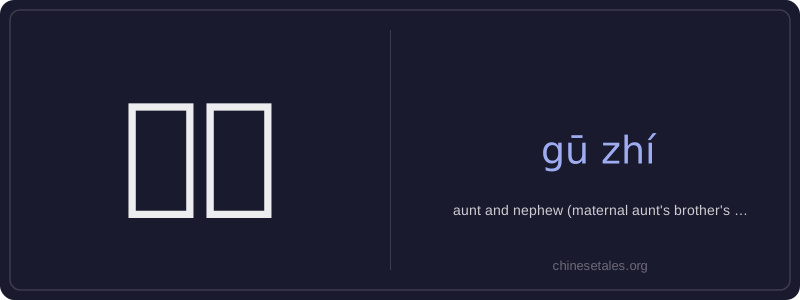
'姑侄' (gū zhí) is a compound noun referring specifically to the kinship relationship between a maternal aunt (a father’s sister) and her brother’s son — that is, the aunt-nephew relationship on the paternal side. The first character 姑 means 'father’s sister', while 侄 denotes 'brother’s son' (used by males to refer to their brothers’ sons; females use 侄女 for nieces). Together, they form a fixed kinship term indicating this precise familial link, commonly used in formal contexts, family discussions, or written descriptions of lineage.
This term emphasizes blood relation through the paternal line and carries connotations of respect and traditional family hierarchy. It does not apply to maternal aunts (mother’s sisters) or their nephews — those relationships use different terms like '姨侄' (yí zhí). '姑侄' appears frequently in legal documents, genealogies, and family gatherings where clarifying generational ties matters, and it reflects Confucian-influenced kinship terminology that distinguishes relatives by line and gender.
Example Sentences
Related Words
国语
‘Guó yǔ’ literally means 'national language'—
无论谁
‘无论谁’ (wú lùn shéi) is a pronoun meaning
外语
‘外语’ literally means ‘outside language’ —
不对
不对 (bù duì) literally combines 不 (bù), meani
我的
我的 (wǒ de) is a possessive pronoun meaning 'my'
违规
违规 (wéi guī) literally means 'to violate rules
亲笔
‘亲笔’ literally means ‘one’s own hand’—comb
面条
‘面条’ (miàn tiáo) literally means ‘flour str