Word Explanation
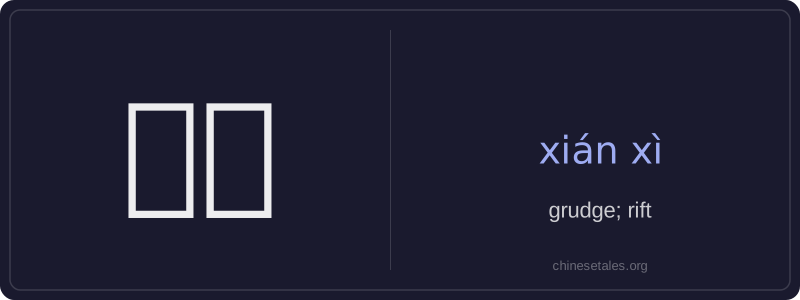
嫌隙 (xián xì) is a formal literary noun meaning 'grudge' or 'rift' — a deep, lingering feeling of resentment or hostility between people, often resulting from past conflict or misunderstanding. The first character 嫌 (xián) means 'distrust', 'dislike', or 'suspicion'; the second character 隙 (xì) literally means 'crack', 'gap', or 'fissure'. Together, they evoke the image of an emotional crack that widens into a lasting rift — not just momentary anger, but a hardened, unspoken distance.
This word is commonly used in written Chinese, historical narratives, and serious discussions about interpersonal or political tensions. It implies something unresolved and potentially damaging over time, and rarely appears in casual speech. You’ll often see it paired with verbs like 产生 (to arise), 加深 (to deepen), or 化解 (to resolve). It carries a slightly classical tone and suggests gravity and duration — more serious than simple 不高兴 (being unhappy) or 生气 (being angry).
Example Sentences
Related Words
国语
‘Guó yǔ’ literally means 'national language'—
无论谁
‘无论谁’ (wú lùn shéi) is a pronoun meaning
外语
‘外语’ literally means ‘outside language’ —
我的
我的 (wǒ de) is a possessive pronoun meaning 'my'
不对
不对 (bù duì) literally combines 不 (bù), meani
违规
违规 (wéi guī) literally means 'to violate rules
亲笔
‘亲笔’ literally means ‘one’s own hand’—comb
面条
‘面条’ (miàn tiáo) literally means ‘flour str