Word Explanation
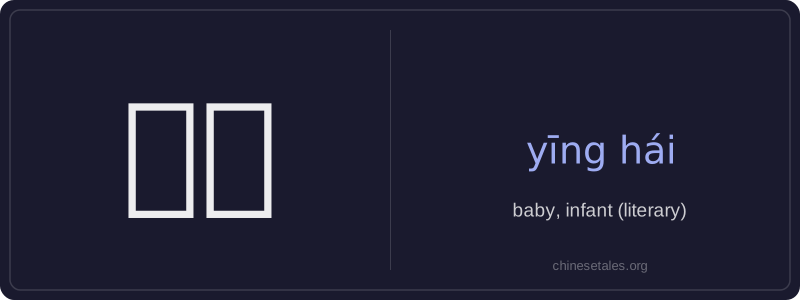
‘婴孩’ (yīng hái) is a formal, literary term meaning ‘baby’ or ‘infant’, typically referring to children under one year old. The character 婴 (yīng) originally depicted a swaddled newborn and carries connotations of infancy and helplessness; 孩 (hái) means ‘child’ and often appears in words for young children, such as 孩子 (hái zi). Together, 婴孩 emphasizes the earliest stage of childhood — delicate, dependent, and pre-verbal — and is commonly used in medical, legal, academic, or literary contexts rather than casual speech.
This term avoids the colloquial tone of words like 宝宝 (bǎo bǎo) or 小孩 (xiǎo hái) and instead conveys gravity or tenderness, especially when discussing development, care, or vulnerability. It frequently appears in public health reports, parenting guides, hospital signage, and classical or modern written prose. While grammatically identical to other nouns, 婴孩 is rarely used with measure words like 个 (gè); instead, it pairs naturally with classifiers such as 一名 (yī míng) or 一位 (yī wèi) in formal registers.
Example Sentences
Related Words
国语
‘Guó yǔ’ literally means 'national language'—
无论谁
‘无论谁’ (wú lùn shéi) is a pronoun meaning
外语
‘外语’ literally means ‘outside language’ —
我的
我的 (wǒ de) is a possessive pronoun meaning 'my'
不对
不对 (bù duì) literally combines 不 (bù), meani
违规
违规 (wéi guī) literally means 'to violate rules
亲笔
‘亲笔’ literally means ‘one’s own hand’—comb
面条
‘面条’ (miàn tiáo) literally means ‘flour str