Word Explanation
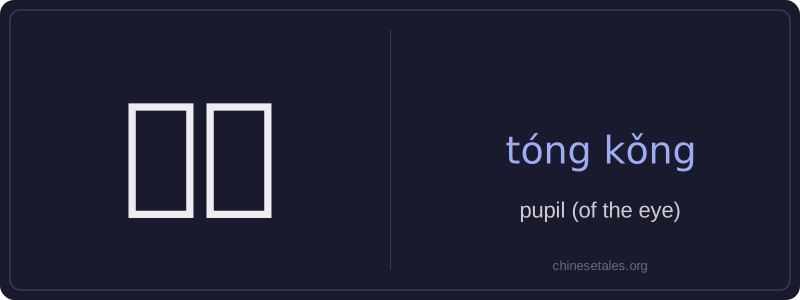
‘瞳孔’ (tóng kǒng) refers specifically to the circular opening in the center of the iris—the part of the eye that controls how much light enters the retina. The first character, 瞳 (tóng), originally meant ‘to look intently’ but in this compound denotes the eye’s visual core; the second, 孔 (kǒng), means ‘opening’ or ‘aperture’. Together, they form a precise anatomical term used in medical, scientific, and everyday contexts when discussing vision, eye health, or physiological reactions (e.g., dilation in low light or emotional arousal).
This word is formal yet common in both written and spoken Chinese—appearing in health education, news reports about eye injuries, and even poetic descriptions of gaze or expression. Unlike more colloquial terms like ‘眼睛’ (yǎn jīng, ‘eye’) or ‘眼珠’ (yǎn zhū, ‘eyeball’), ‘瞳孔’ emphasizes structure and function, not appearance or emotion alone. It’s rarely used metaphorically without clear context, and never as a verb or modifier.
Example Sentences
Related Words
国语
‘Guó yǔ’ literally means 'national language'—
无论谁
‘无论谁’ (wú lùn shéi) is a pronoun meaning
外语
‘外语’ literally means ‘outside language’ —
我的
我的 (wǒ de) is a possessive pronoun meaning 'my'
不对
不对 (bù duì) literally combines 不 (bù), meani
违规
违规 (wéi guī) literally means 'to violate rules
亲笔
‘亲笔’ literally means ‘one’s own hand’—comb
面条
‘面条’ (miàn tiáo) literally means ‘flour str