Word Explanation
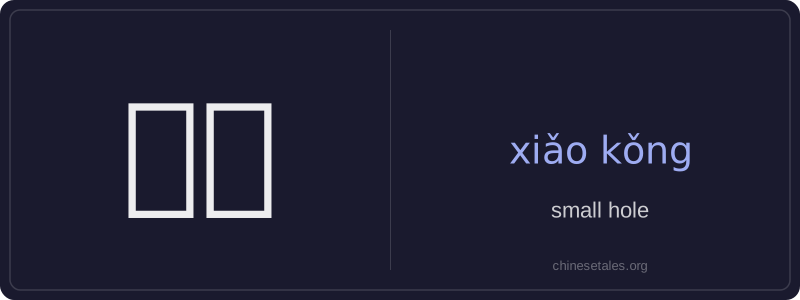
‘小孔’ literally means ‘small hole’ — 小 (xiǎo) means ‘small’ or ‘little’, and 孔 (kǒng) means ‘hole’, ‘aperture’, or ‘orifice’. Together, they form a compound noun that refers to any small, often naturally occurring or precisely made opening — such as in animal anatomy (e.g., ear canals, nasal passages), biological structures (e.g., stomata in plant leaves), or man-made objects (e.g., pinholes in screens or filters). It carries a neutral, descriptive tone and is commonly used in scientific, medical, and everyday contexts.
Unlike more general terms like 洞 (dòng, ‘cave’ or ‘large hole’) or 缝 (fèng, ‘slit’ or ‘crack’), 小孔 emphasizes both size and function: it suggests a deliberately or inherently narrow passage that may serve a specific purpose — for instance, allowing light, air, or fluid to pass through. It appears frequently in biology textbooks, veterinary reports, and technical descriptions of devices with fine perforations.
Example Sentences
Related Words
国语
‘Guó yǔ’ literally means 'national language'—
无论谁
‘无论谁’ (wú lùn shéi) is a pronoun meaning
外语
‘外语’ literally means ‘outside language’ —
我的
我的 (wǒ de) is a possessive pronoun meaning 'my'
不对
不对 (bù duì) literally combines 不 (bù), meani
违规
违规 (wéi guī) literally means 'to violate rules
亲笔
‘亲笔’ literally means ‘one’s own hand’—comb
面条
‘面条’ (miàn tiáo) literally means ‘flour str