Word Explanation
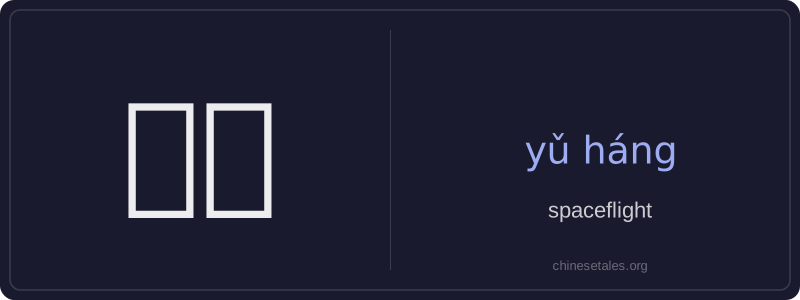
'宇航' (yǔ háng) is a compound noun meaning 'spaceflight' or 'space travel.' It combines two characters: 宇 (yǔ), short for 宇宙 (yǔzhòu, 'universe' or 'outer space'), and 航 (háng), from 航行 (hángxíng, 'to navigate' or 'to voyage'). Together, they literally mean 'navigation through outer space,' emphasizing human activity beyond Earth’s atmosphere — including manned missions, satellite launches, and interplanetary exploration.
This term is formal and technical, commonly used in news reports, scientific writing, and official contexts related to aerospace. It does not refer to aviation within Earth’s atmosphere (that’s 航空, hángkōng) nor to general astronomy (天文学, tiānwénxué). While often paired with words like 技术 (jìshù, 'technology'), 计划 (jìhuà, 'program'), or 员 (yuán, 'astronaut'), 宇航 itself functions as a standalone noun and rarely appears in casual speech.
Example Sentences
Related Words
国语
‘Guó yǔ’ literally means 'national language'—
无论谁
‘无论谁’ (wú lùn shéi) is a pronoun meaning
外语
‘外语’ literally means ‘outside language’ —
我的
我的 (wǒ de) is a possessive pronoun meaning 'my'
不对
不对 (bù duì) literally combines 不 (bù), meani
违规
违规 (wéi guī) literally means 'to violate rules
亲笔
‘亲笔’ literally means ‘one’s own hand’—comb
面条
‘面条’ (miàn tiáo) literally means ‘flour str