Word Explanation
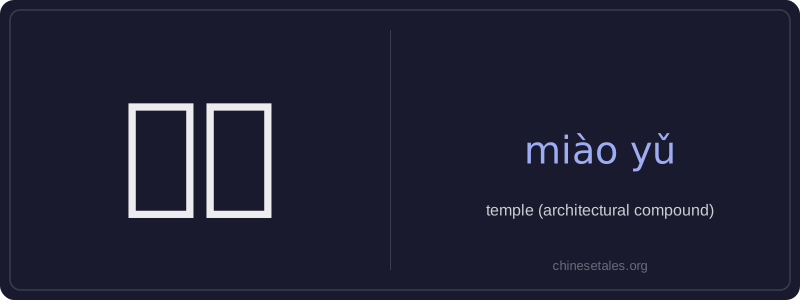
庙宇 (miào yǔ) is a formal, literary noun meaning 'temple'—specifically referring to a traditional Chinese religious architectural compound, often associated with Buddhism, Daoism, or folk religion. The character 庙 (miào) originally meant 'ancestral hall' or 'shrine', while 宇 (yǔ) means 'roof', 'eaves', or by extension 'building' or 'structure'. Together, they evoke the image of a sacred building complex with courtyards, halls, and pavilions—not just a single room or modern structure.
This term emphasizes architectural grandeur and historical/cultural significance; it’s commonly used in writing, travel descriptions, historical texts, and cultural discussions. It’s more formal and poetic than the simpler word 寺 (sì, 'Buddhist temple') or 庙 (miào) alone, and rarely appears in casual speech. You’ll encounter it in phrases like '古庙宇' (ancient temples) or '名胜古迹中的庙宇' (temples among famous scenic and historic sites).
Example Sentences
Related Words
国语
‘Guó yǔ’ literally means 'national language'—
无论谁
‘无论谁’ (wú lùn shéi) is a pronoun meaning
外语
‘外语’ literally means ‘outside language’ —
我的
我的 (wǒ de) is a possessive pronoun meaning 'my'
不对
不对 (bù duì) literally combines 不 (bù), meani
违规
违规 (wéi guī) literally means 'to violate rules
亲笔
‘亲笔’ literally means ‘one’s own hand’—comb
面条
‘面条’ (miàn tiáo) literally means ‘flour str