Word Explanation
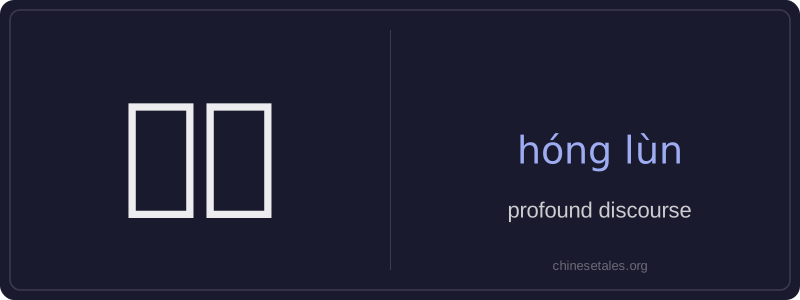
‘宏论’ (hóng lùn) is a formal, literary noun meaning 'profound discourse' or 'weighty, insightful exposition'. The first character 宏 (hóng) means 'vast', 'grand', or 'broad', suggesting scope and depth; the second character 论 (lùn) means 'discussion', 'treatise', or 'theory'. Together, they convey a scholarly, authoritative, and intellectually substantial statement or essay—often one that offers new perspectives or synthesizes complex ideas.
This term appears almost exclusively in written Chinese or elevated spoken contexts: academic lectures, editorials, award speeches, or literary criticism. It carries positive connotations of wisdom and intellectual rigor, and is rarely used in casual conversation. While it can refer to spoken remarks, it emphasizes content over delivery—what is said matters more than how it’s said. It is frequently paired with verbs like 发表 (to deliver), 听取 (to listen to), or 拜读 (to respectfully read).
Example Sentences
Related Words
国语
‘Guó yǔ’ literally means 'national language'—
无论谁
‘无论谁’ (wú lùn shéi) is a pronoun meaning
外语
‘外语’ literally means ‘outside language’ —
我的
我的 (wǒ de) is a possessive pronoun meaning 'my'
不对
不对 (bù duì) literally combines 不 (bù), meani
违规
违规 (wéi guī) literally means 'to violate rules
亲笔
‘亲笔’ literally means ‘one’s own hand’—comb
面条
‘面条’ (miàn tiáo) literally means ‘flour str