Word Explanation
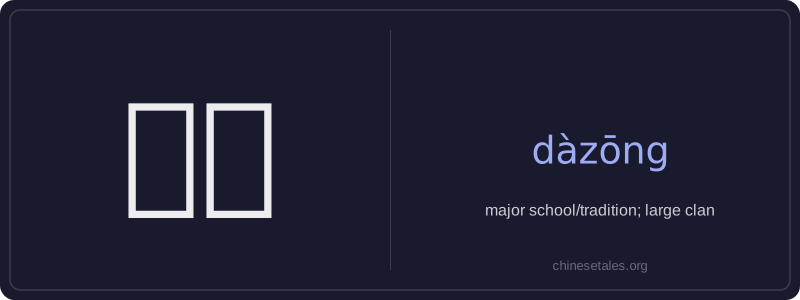
‘大宗’ literally combines ‘大’ (dà, meaning 'great' or 'major') and ‘宗’ (zōng, meaning 'clan', 'school', or 'tradition'). Together, it refers to a large, influential lineage, sect, or tradition—often in historical, religious, or academic contexts. It emphasizes size, authority, and continuity: for example, the dominant branch of a philosophical school or the principal lineage of a family with deep ancestral roots.
The term appears frequently in classical Chinese texts and modern discussions of cultural heritage, Daoist or Buddhist sects, and genealogical studies. While it can denote a literal large clan, its more common use is figurative—highlighting institutional prominence rather than sheer headcount. It carries a formal, somewhat literary tone and is rarely used in casual speech about ordinary families or groups.
Example Sentences
Related Words
国语
‘Guó yǔ’ literally means 'national language'—
无论谁
‘无论谁’ (wú lùn shéi) is a pronoun meaning
外语
‘外语’ literally means ‘outside language’ —
我的
我的 (wǒ de) is a possessive pronoun meaning 'my'
不对
不对 (bù duì) literally combines 不 (bù), meani
违规
违规 (wéi guī) literally means 'to violate rules
亲笔
‘亲笔’ literally means ‘one’s own hand’—comb
面条
‘面条’ (miàn tiáo) literally means ‘flour str