Word Explanation
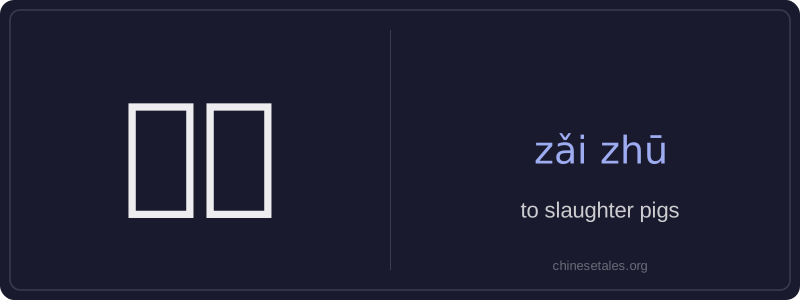
宰猪 literally means 'to slaughter pigs' — 宰 (zǎi) is a verb meaning 'to slaughter' or 'to butcher', often used for livestock, while 猪 (zhū) means 'pig'. Together, 宰猪 refers specifically to the act of killing pigs for meat production, typically in rural or agricultural settings. It’s a straightforward compound verb with no grammatical particles needed.
This term is commonly used in contexts related to farming, traditional festivals (e.g., preparing for Chinese New Year), or food supply chains. It carries a neutral, factual tone — not inherently emotional or judgmental, though modern urban speakers may use it more cautiously due to increasing awareness of animal welfare. The word appears in both spoken and written Chinese, especially in reports about agriculture, village life, or food safety regulations.
Example Sentences
Related Words
国语
‘Guó yǔ’ literally means 'national language'—
无论谁
‘无论谁’ (wú lùn shéi) is a pronoun meaning
外语
‘外语’ literally means ‘outside language’ —
我的
我的 (wǒ de) is a possessive pronoun meaning 'my'
不对
不对 (bù duì) literally combines 不 (bù), meani
违规
违规 (wéi guī) literally means 'to violate rules
亲笔
‘亲笔’ literally means ‘one’s own hand’—comb
面条
‘面条’ (miàn tiáo) literally means ‘flour str