Word Explanation
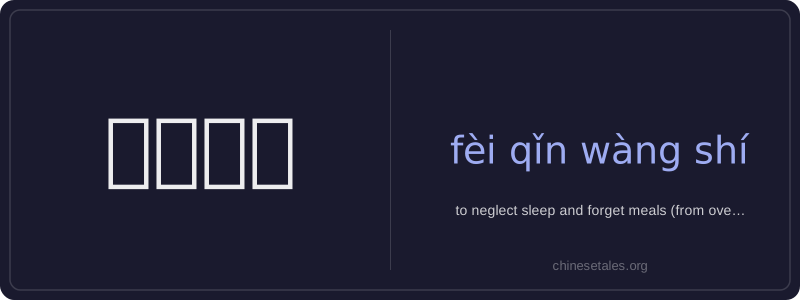
废寝忘食 is a classical four-character idiom that literally means 'to abandon sleep and forget meals.' Each character contributes to this vivid image: 废 (fèi) means 'to abandon or neglect,' 寝 (qǐn) means 'sleep' or 'bedtime,' 忘 (wàng) means 'to forget,' and 食 (shí) means 'food' or 'meals.' Together, they describe intense, single-minded dedication—so absorbed in work or study that one loses track of basic bodily needs.
This idiom is commonly used to praise diligence, especially in academic, artistic, or professional contexts. It carries a positive connotation of admirable commitment, though modern usage sometimes hints at unhealthy overwork. It functions as an adverbial phrase modifying verbs (e.g., 工作、学习、钻研), and is typically placed before the verb it modifies or at the end of a clause. It appears frequently in formal writing, speeches, and educational settings—not in casual conversation.
Example Sentences
Related Words
国语
‘Guó yǔ’ literally means 'national language'—
无论谁
‘无论谁’ (wú lùn shéi) is a pronoun meaning
外语
‘外语’ literally means ‘outside language’ —
我的
我的 (wǒ de) is a possessive pronoun meaning 'my'
不对
不对 (bù duì) literally combines 不 (bù), meani
违规
违规 (wéi guī) literally means 'to violate rules
亲笔
‘亲笔’ literally means ‘one’s own hand’—comb
面条
‘面条’ (miàn tiáo) literally means ‘flour str