Word Explanation
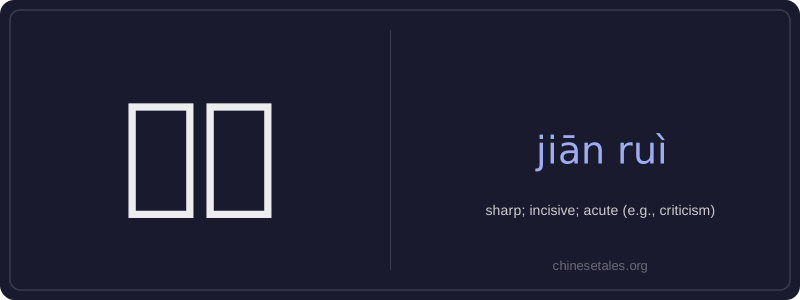
'尖锐' (jiān ruì) is a compound adjective formed from two characters: 尖 (jiān), meaning 'sharp-pointed' or 'piercing', and 锐 (ruì), meaning 'keen', 'acute', or 'incisive'. Together, they emphasize intensity, clarity, and penetrating quality—not just physically sharp (like a needle), but especially in abstract contexts like speech, criticism, conflict, or perception. It often carries a slightly negative or tense connotation, suggesting something uncomfortably direct, hard to ignore, or potentially confrontational.
This word is commonly used to describe criticism, questions, contradictions, social problems, or tones of voice—e.g., '尖锐的批评' (incisive criticism) or '尖锐的矛盾' (acute contradiction). It’s more formal than everyday adjectives like '厉害' or '强烈' and appears frequently in news reports, academic writing, and political or social commentary. While it can occasionally describe physical sharpness (e.g., a knife), that usage is rare; for literal sharpness, '锋利' (fēnglì) is preferred.
Example Sentences
Related Words
国语
‘Guó yǔ’ literally means 'national language'—
无论谁
‘无论谁’ (wú lùn shéi) is a pronoun meaning
外语
‘外语’ literally means ‘outside language’ —
我的
我的 (wǒ de) is a possessive pronoun meaning 'my'
不对
不对 (bù duì) literally combines 不 (bù), meani
违规
违规 (wéi guī) literally means 'to violate rules
亲笔
‘亲笔’ literally means ‘one’s own hand’—comb
面条
‘面条’ (miàn tiáo) literally means ‘flour str