Word Explanation
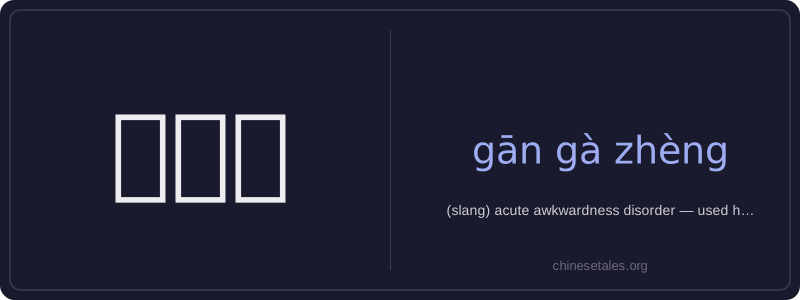
'尴尬症' is internet slang that humorously mimics medical terminology to describe an exaggerated, almost physical reaction to social awkwardness — like blushing, sweating, or wanting to disappear when something cringeworthy happens. Though not a real medical condition, it's widely used in casual speech and online to express secondhand embarrassment or intense personal discomfort during social mishaps.
The word combines 尴尬 (gān gà), meaning 'awkward' or 'embarrassed', with 症 (zhèng), meaning 'syndrome' or 'disorder'. This playful suffix turns a feeling into a mock diagnosis, adding irony and lightness. It’s especially common among young Chinese netizens discussing cringe moments, miscommunications, or cultural faux pas — always with self-deprecating or empathetic humor, never clinical seriousness.
Example Sentences
Related Words
国语
‘Guó yǔ’ literally means 'national language'—
无论谁
‘无论谁’ (wú lùn shéi) is a pronoun meaning
外语
‘外语’ literally means ‘outside language’ —
我的
我的 (wǒ de) is a possessive pronoun meaning 'my'
不对
不对 (bù duì) literally combines 不 (bù), meani
违规
违规 (wéi guī) literally means 'to violate rules
亲笔
‘亲笔’ literally means ‘one’s own hand’—comb
面条
‘面条’ (miàn tiáo) literally means ‘flour str