Word Explanation
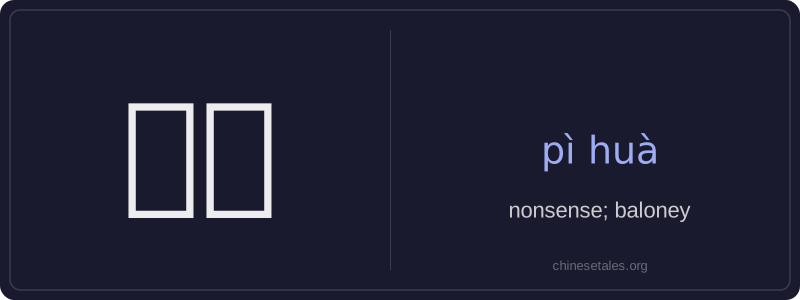
'Pì huà' literally combines 'pì' (fart) and 'huà' (speech or talk), creating a vivid, informal expression meaning 'nonsense' or 'baloney'—something utterly baseless, ridiculous, or deliberately deceptive. The word carries strong dismissive and contemptuous connotations, often used to reject someone’s claim as worthless or absurd. It reflects Chinese speakers’ tendency to use bodily functions metaphorically for rhetorical force, similar to English expressions like 'bullshit' but slightly milder in intensity and more commonly heard in casual spoken contexts among peers or family.
This term is rarely appropriate in formal writing or respectful conversation; it signals frustration, mockery, or impatience. While not vulgar per se, its crudeness makes it unsuitable for addressing elders, superiors, or strangers. It frequently appears in arguments, online comments, or light-hearted banter where the speaker wants to bluntly shut down nonsense without engaging seriously.
Example Sentences
Related Words
国语
‘Guó yǔ’ literally means 'national language'—
无论谁
‘无论谁’ (wú lùn shéi) is a pronoun meaning
外语
‘外语’ literally means ‘outside language’ —
我的
我的 (wǒ de) is a possessive pronoun meaning 'my'
不对
不对 (bù duì) literally combines 不 (bù), meani
违规
违规 (wéi guī) literally means 'to violate rules
亲笔
‘亲笔’ literally means ‘one’s own hand’—comb
面条
‘面条’ (miàn tiáo) literally means ‘flour str