Word Explanation
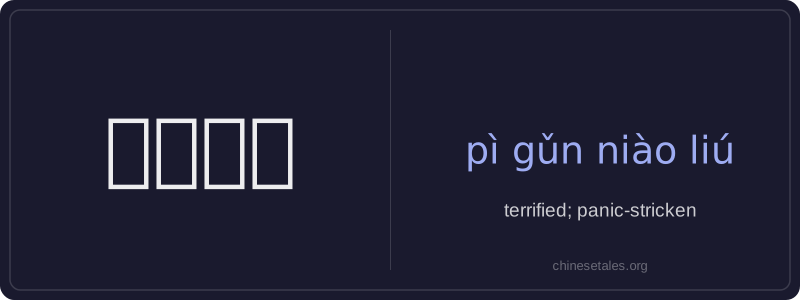
'Pì gǔn niào liú' is a vivid, hyperbolic idiom describing extreme terror—so intense that one loses bodily control, literally 'farting, rolling, urinating, and flowing'. Each character contributes to the chaotic physical reaction: 屁 (fart), 滚 (roll or tumble uncontrollably), 尿 (urinate), and 流 (flow or stream). Though graphic, it’s used humorously or figuratively—not literally—and always emphasizes overwhelming, comical panic rather than genuine distress.
This expression is common in spoken Mandarin and informal writing, especially when recounting funny or exaggerated stories of fear. It carries strong colloquial flavor and mild vulgarity, so it’s unsuitable for formal contexts or polite conversation. Native speakers often use it playfully—for instance, describing how a child reacted to a loud firecracker or how a timid person fled at the sight of a harmless lizard.
Example Sentences
Related Words
国语
‘Guó yǔ’ literally means 'national language'—
无论谁
‘无论谁’ (wú lùn shéi) is a pronoun meaning
外语
‘外语’ literally means ‘outside language’ —
我的
我的 (wǒ de) is a possessive pronoun meaning 'my'
不对
不对 (bù duì) literally combines 不 (bù), meani
违规
违规 (wéi guī) literally means 'to violate rules
亲笔
‘亲笔’ literally means ‘one’s own hand’—comb
面条
‘面条’ (miàn tiáo) literally means ‘flour str