Word Explanation
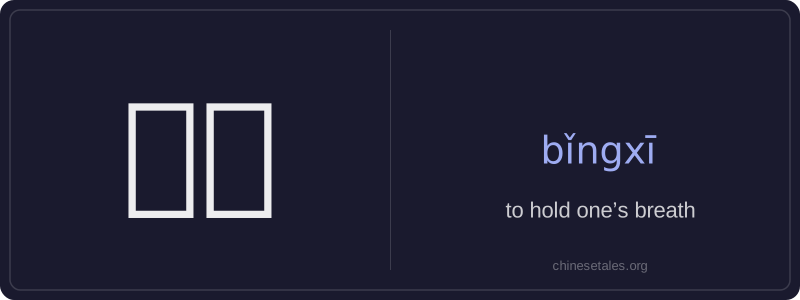
屏息 literally combines 屏 (bǐng), meaning 'to suppress or restrain', and 息 (xī), meaning 'breath'. Together, they form a verb meaning 'to hold one’s breath' — physically stopping inhalation and exhalation, often due to intense emotion, concentration, fear, awe, or suspense. It describes a conscious, temporary suspension of breathing, not unconscious cessation.
This word is commonly used in literary, descriptive, or dramatic contexts — for example, when someone is startled by something unexpected, deeply focused on a delicate task, or captivated by beauty or danger. While it can appear in spoken Chinese, it carries a slightly formal or vivid tone, making it more frequent in writing, storytelling, or expressive speech than in casual daily conversation. It is rarely used in medical or physiological discussions (where terms like 呼吸暂停 are preferred).
Example Sentences
Related Words
国语
‘Guó yǔ’ literally means 'national language'—
无论谁
‘无论谁’ (wú lùn shéi) is a pronoun meaning
外语
‘外语’ literally means ‘outside language’ —
我的
我的 (wǒ de) is a possessive pronoun meaning 'my'
不对
不对 (bù duì) literally combines 不 (bù), meani
违规
违规 (wéi guī) literally means 'to violate rules
亲笔
‘亲笔’ literally means ‘one’s own hand’—comb
面条
‘面条’ (miàn tiáo) literally means ‘flour str