Word Explanation
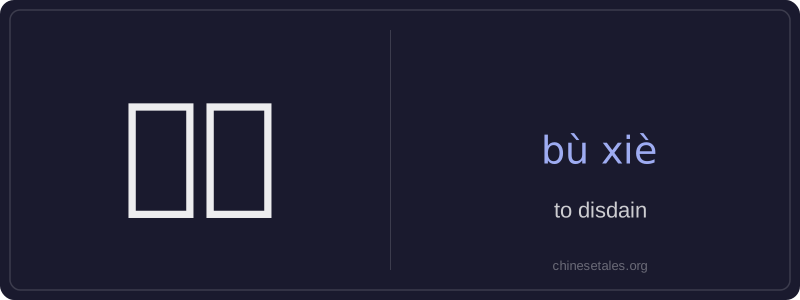
‘不屑’ is a verb meaning ‘to disdain’, ‘to look down upon’, or ‘to consider something unworthy of attention or effort’. The character ‘不’ means ‘not’, while ‘屑’ originally refers to small fragments or scraps — metaphorically extended to mean ‘something trivial or beneath one’s dignity’. Together, ‘不屑’ conveys the idea of refusing to lower oneself to engage with something perceived as inferior, vulgar, or unimportant. It expresses strong contempt or aloofness, often implying moral or intellectual superiority.
This word frequently appears in formal writing, literature, and serious speech — less common in casual conversation. It’s typically followed by a verb (e.g., 不屑一顾, 不屑回答) or used adverbially (e.g., 不屑地笑了). It carries a slightly literary, sometimes critical tone, and may suggest arrogance if used without nuance. Note that ‘屑’ alone is rarely used in modern spoken Chinese; it appears almost exclusively in compounds like ‘不屑’ or ‘琐屑’.
Example Sentences
Related Words
国语
‘Guó yǔ’ literally means 'national language'—
无论谁
‘无论谁’ (wú lùn shéi) is a pronoun meaning
外语
‘外语’ literally means ‘outside language’ —
我的
我的 (wǒ de) is a possessive pronoun meaning 'my'
不对
不对 (bù duì) literally combines 不 (bù), meani
违规
违规 (wéi guī) literally means 'to violate rules
亲笔
‘亲笔’ literally means ‘one’s own hand’—comb
面条
‘面条’ (miàn tiáo) literally means ‘flour str