Word Explanation
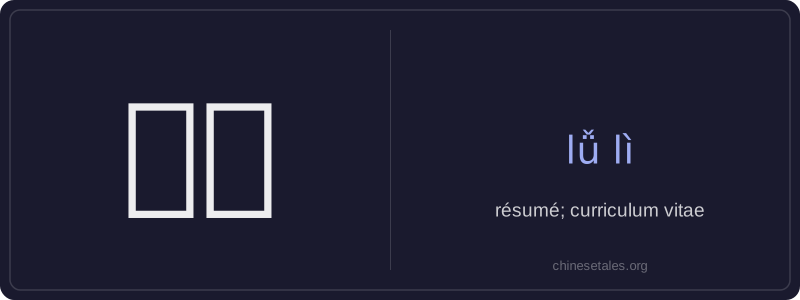
‘履历’ (lǚ lì) is a formal noun meaning ‘résumé’ or ‘curriculum vitae’ — a document summarizing a person’s education, work experience, skills, and qualifications. The character 履 (lǚ) originally means ‘to step on’ or ‘to carry out’, suggesting action and experience; 历 (lì) means ‘to go through’ or ‘past time’, evoking history and progression. Together, they convey the idea of one’s professional and academic ‘path walked through’ — a chronological record of life experience.
This term is commonly used in job applications, academic admissions, and official personnel files in Chinese-speaking contexts. It carries a formal, slightly bureaucratic tone and is preferred over more colloquial alternatives like 简历 (jiǎn lì) in official documents, government forms, or corporate HR processes. While both 履历 and 简历 refer to résumés, 履历 emphasizes completeness and historical record, whereas 简历 stresses conciseness and selectivity.
Example Sentences
Related Words
国语
‘Guó yǔ’ literally means 'national language'—
无论谁
‘无论谁’ (wú lùn shéi) is a pronoun meaning
外语
‘外语’ literally means ‘outside language’ —
我的
我的 (wǒ de) is a possessive pronoun meaning 'my'
不对
不对 (bù duì) literally combines 不 (bù), meani
违规
违规 (wéi guī) literally means 'to violate rules
亲笔
‘亲笔’ literally means ‘one’s own hand’—comb
面条
‘面条’ (miàn tiáo) literally means ‘flour str