Word Explanation
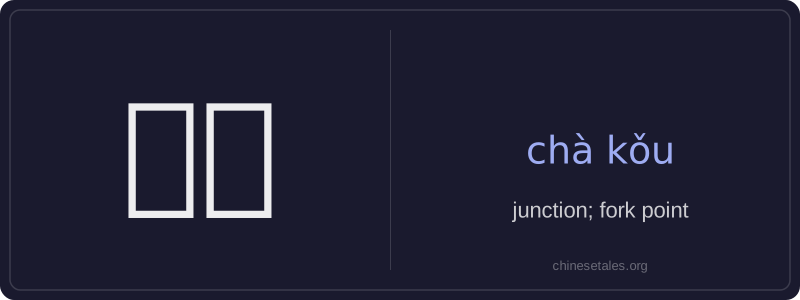
岔口 literally combines 岔 (chà), meaning 'branch' or 'divergence', and 口 (kǒu), meaning 'mouth' or 'opening'. Together, it refers to a physical point where a path, road, river, or railway splits into two or more directions — essentially a 'junction' or 'fork'. It is commonly used in navigation, transportation, and geography contexts, especially when giving directions or describing terrain.
The word emphasizes the moment or location of divergence rather than the routes themselves. While it can describe literal intersections (e.g., mountain trails or city streets), it’s also used metaphorically for decision points in life — though this figurative use is less common in everyday speech and more frequent in literary or reflective contexts. 岔口 carries a neutral tone and appears frequently on signs, maps, and spoken instructions in both urban and rural settings.
Example Sentences
Related Words
国语
‘Guó yǔ’ literally means 'national language'—
无论谁
‘无论谁’ (wú lùn shéi) is a pronoun meaning
外语
‘外语’ literally means ‘outside language’ —
我的
我的 (wǒ de) is a possessive pronoun meaning 'my'
不对
不对 (bù duì) literally combines 不 (bù), meani
违规
违规 (wéi guī) literally means 'to violate rules
亲笔
‘亲笔’ literally means ‘one’s own hand’—comb
面条
‘面条’ (miàn tiáo) literally means ‘flour str