Word Explanation
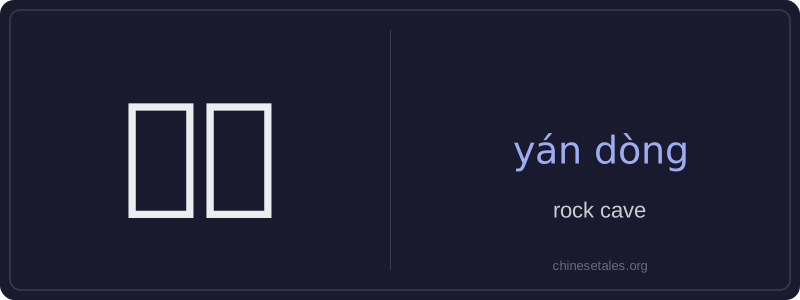
'Yán dòng' literally combines 岩 (yán), meaning 'rock' or 'cliff', and 洞 (dòng), meaning 'cave' or 'hole'. Together, they refer specifically to a natural cave formed in rock—often limestone, granite, or other bedrock—shaped by erosion, weathering, or geological processes. Unlike man-made tunnels or simple hollows, 岩洞 implies geological authenticity and structural stability.
This term is commonly used in geography, tourism, and nature writing—for example, describing scenic karst landscapes in Guangxi or Guizhou provinces. It appears in guidebooks, scientific reports, and travel blogs, but rarely in casual daily speech; most people would say 洞 for generic 'cave' unless emphasizing the rocky origin. The word carries a slightly formal or descriptive tone and often evokes images of stalactites, underground rivers, or ancient human habitation sites.
Example Sentences
Related Words
国语
‘Guó yǔ’ literally means 'national language'—
无论谁
‘无论谁’ (wú lùn shéi) is a pronoun meaning
外语
‘外语’ literally means ‘outside language’ —
我的
我的 (wǒ de) is a possessive pronoun meaning 'my'
不对
不对 (bù duì) literally combines 不 (bù), meani
违规
违规 (wéi guī) literally means 'to violate rules
亲笔
‘亲笔’ literally means ‘one’s own hand’—comb
面条
‘面条’ (miàn tiáo) literally means ‘flour str