Word Explanation
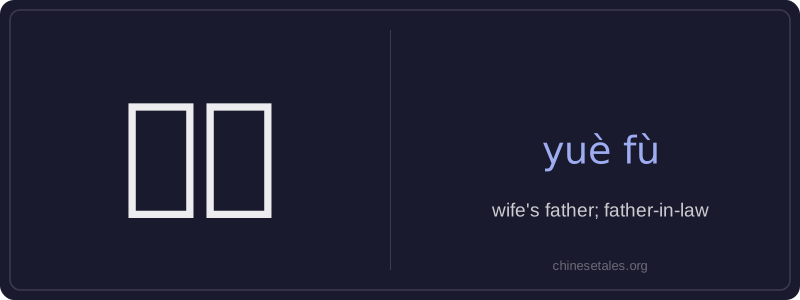
'Yuè fù' literally combines 岳 (yuè), an ancient term for 'mountain' that historically referred to the wife's family’s ancestral mountain or region, and 父 (fù), meaning 'father'. Together, it specifically denotes one's wife's father — the male parent of one's spouse. Unlike the more general term 丈人 (zhàng rén), which can sometimes be used informally or even jokingly, 岳父 is respectful, standard, and commonly used in both spoken and written Chinese when referring to this familial relationship.
This term reflects traditional Chinese kinship terminology, where relationships through marriage are marked with distinct, non-ambiguous vocabulary. It is used in formal introductions, family discussions, official documents (e.g., visa applications listing relatives), and everyday conversation when speaking about or addressing one’s wife’s father. The word carries neutral-to-formal register and is appropriate across generations and social contexts.
Example Sentences
Related Words
国语
‘Guó yǔ’ literally means 'national language'—
无论谁
‘无论谁’ (wú lùn shéi) is a pronoun meaning
外语
‘外语’ literally means ‘outside language’ —
我的
我的 (wǒ de) is a possessive pronoun meaning 'my'
不对
不对 (bù duì) literally combines 不 (bù), meani
违规
违规 (wéi guī) literally means 'to violate rules
亲笔
‘亲笔’ literally means ‘one’s own hand’—comb
面条
‘面条’ (miàn tiáo) literally means ‘flour str