Word Explanation
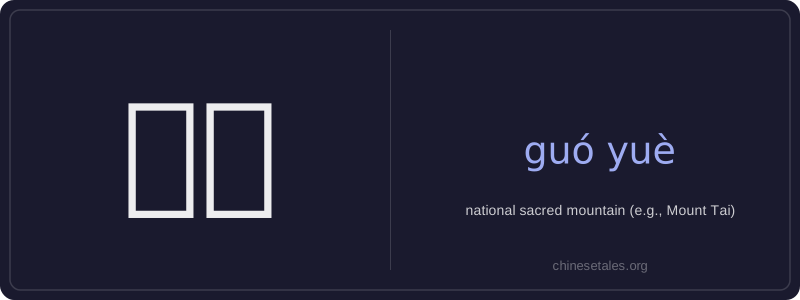
‘国岳’ literally means ‘national sacred mountain’—a title bestowed upon mountains of exceptional cultural, historical, and religious significance in China. The character 国 (guó) means ‘nation’ or ‘state’, while 岳 (yuè) refers specifically to a lofty, revered mountain, often one of the Five Great Mountains (Wu Yue). Unlike ordinary mountains, a 国岳 is officially recognized for its role in imperial rituals, Daoist and Buddhist traditions, and national identity.
This term carries strong historical and symbolic weight and is rarely used in casual speech. It appears mainly in classical texts, historical documentaries, academic writing, or formal cultural discourse. Mount Tai (Taishan), the most famous 国岳, has been venerated for over two millennia as the eastern peak and spiritual anchor of Chinese civilization. While modern usage is limited, understanding 国岳 helps learners grasp how geography and ideology intertwine in Chinese cultural expression.
Example Sentences
Related Words
国语
‘Guó yǔ’ literally means 'national language'—
无论谁
‘无论谁’ (wú lùn shéi) is a pronoun meaning
外语
‘外语’ literally means ‘outside language’ —
我的
我的 (wǒ de) is a possessive pronoun meaning 'my'
不对
不对 (bù duì) literally combines 不 (bù), meani
违规
违规 (wéi guī) literally means 'to violate rules
亲笔
‘亲笔’ literally means ‘one’s own hand’—comb
面条
‘面条’ (miàn tiáo) literally means ‘flour str