Word Explanation
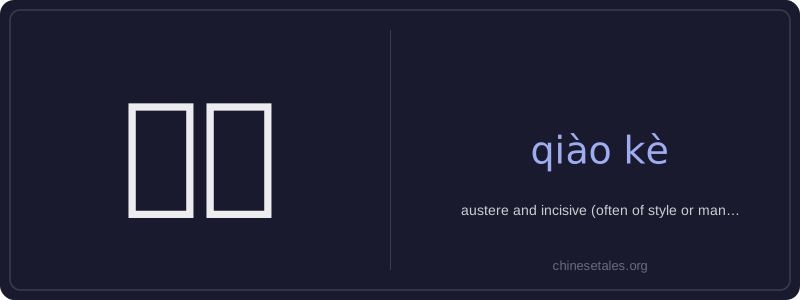
‘峭刻’ is an adjective describing a style, tone, or manner that is both austere (stern, unadorned, even harsh) and incisive (sharply perceptive or penetrating). The first character 峭 (qiào) evokes steepness and severity—like a sheer cliff—suggesting rigidity and lack of warmth. The second character 刻 (kè) means 'to carve' or 'to engrave', implying precision, sharpness, and sometimes merciless clarity. Together, they convey a quality that is intellectually rigorous but emotionally detached, often used to describe writing, criticism, speech, or personality.
This word appears primarily in literary, academic, or evaluative contexts—not in casual conversation. It carries a slightly negative or critical connotation, suggesting admirable sharpness but at the cost of empathy or accessibility. You’ll encounter it in literary criticism (e.g., describing a writer’s prose), political commentary, or psychological portraits of stern figures.
Example Sentences
Related Words
国语
‘Guó yǔ’ literally means 'national language'—
无论谁
‘无论谁’ (wú lùn shéi) is a pronoun meaning
外语
‘外语’ literally means ‘outside language’ —
我的
我的 (wǒ de) is a possessive pronoun meaning 'my'
不对
不对 (bù duì) literally combines 不 (bù), meani
违规
违规 (wéi guī) literally means 'to violate rules
亲笔
‘亲笔’ literally means ‘one’s own hand’—comb
面条
‘面条’ (miàn tiáo) literally means ‘flour str