Word Explanation
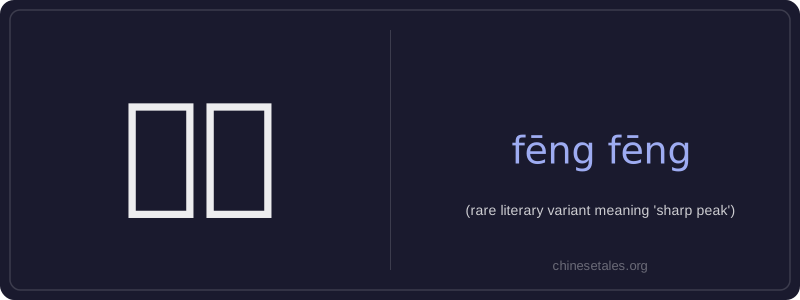
'锋峰' is a rare, literary compound formed by doubling the character '锋' (fēng), meaning 'sharp edge' or 'cutting point', and '峰' (fēng), meaning 'peak' or 'summit'. Though visually identical to '峰峰', it is not a standard reduplication; rather, it functions as a poetic variant emphasizing the piercing, jagged quality of a mountain peak — evoking an image of a razor-sharp, soaring summit. It appears almost exclusively in classical poetry, inscriptions, or highly stylized descriptive prose, never in spoken or modern written Chinese.
This term carries strong visual and metaphorical weight: it suggests not just height, but intensity, precision, and natural force — like a blade thrust upward from the earth. Because both characters share the same pronunciation and radical-related meanings (metal and mountain), the pairing creates a resonant, almost onomatopoeic effect. Learners should recognize it as archaic and stylistic, not productive — it cannot be extended to other nouns or used conversationally.
Example Sentences
Related Words
国语
‘Guó yǔ’ literally means 'national language'—
无论谁
‘无论谁’ (wú lùn shéi) is a pronoun meaning
外语
‘外语’ literally means ‘outside language’ —
我的
我的 (wǒ de) is a possessive pronoun meaning 'my'
不对
不对 (bù duì) literally combines 不 (bù), meani
违规
违规 (wéi guī) literally means 'to violate rules
亲笔
‘亲笔’ literally means ‘one’s own hand’—comb
面条
‘面条’ (miàn tiáo) literally means ‘flour str