Word Explanation
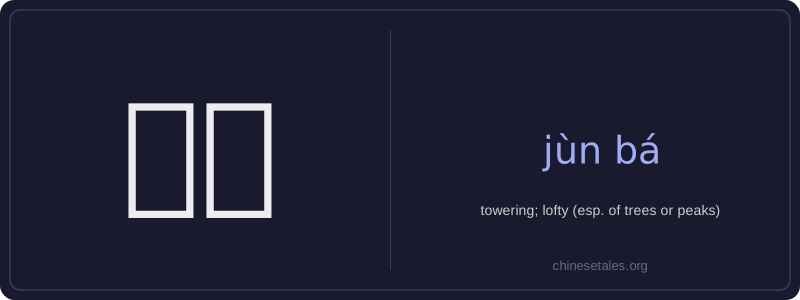
峻拔 (jùn bá) is an elegant literary adjective describing something tall, steep, and imposing—especially natural features like mountain peaks or ancient trees. The character 峻 means 'steep; lofty; stern', evoking vertical grandeur and ruggedness, while 拔 means 'to pull up; to rise above', suggesting upward thrust and prominence. Together, they emphasize not just height but also a sense of majestic, unyielding ascent—often with connotations of dignity, strength, and timelessness.
This term appears frequently in classical poetry, travel writing, and landscape descriptions. It’s rarely used for man-made structures or people (unlike 高大 or 英俊), and carries a refined, slightly formal tone. You’ll encounter it more in written Chinese than in casual speech, especially when praising the awe-inspiring scale and grace of nature—such as pine trees clinging to cliffs or jagged alpine ridges piercing the clouds.
Example Sentences
Related Words
国语
‘Guó yǔ’ literally means 'national language'—
无论谁
‘无论谁’ (wú lùn shéi) is a pronoun meaning
外语
‘外语’ literally means ‘outside language’ —
我的
我的 (wǒ de) is a possessive pronoun meaning 'my'
不对
不对 (bù duì) literally combines 不 (bù), meani
违规
违规 (wéi guī) literally means 'to violate rules
亲笔
‘亲笔’ literally means ‘one’s own hand’—comb
面条
‘面条’ (miàn tiáo) literally means ‘flour str