Word Explanation
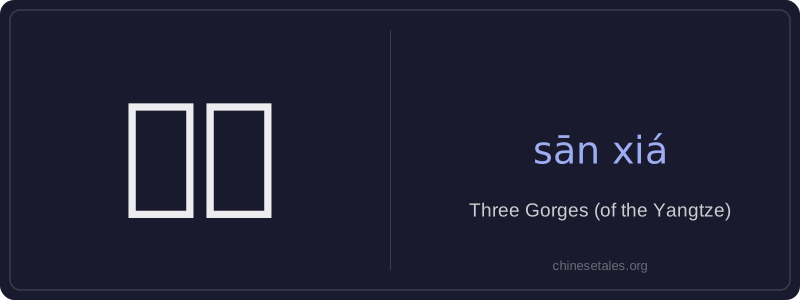
"Three Gorges" (Sān Xiá) refers to the famous stretch of the Yangtze River in central China where the river passes through three dramatic, narrow gorges: Qutang Gorge, Wu Gorge, and Xiling Gorge. The characters break down literally as 三 (sān), meaning "three," and 峡 (xiá), meaning "gorge" or "ravine"—a deep valley with steep sides, typically formed by a river cutting through mountains. Together, they form a proper noun denoting this specific geographical region.
The Three Gorges is renowned for its breathtaking natural scenery, rich cultural history, and the massive Three Gorges Dam—the world’s largest hydroelectric power station. It appears frequently in travel writing, geography textbooks, environmental discussions, and news reports about infrastructure or ecological impact. While it names a physical location, it’s also used metonymically to refer to the broader area, its ecosystems, or the dam project itself.
Example Sentences
Related Words
国语
‘Guó yǔ’ literally means 'national language'—
无论谁
‘无论谁’ (wú lùn shéi) is a pronoun meaning
外语
‘外语’ literally means ‘outside language’ —
我的
我的 (wǒ de) is a possessive pronoun meaning 'my'
不对
不对 (bù duì) literally combines 不 (bù), meani
违规
违规 (wéi guī) literally means 'to violate rules
亲笔
‘亲笔’ literally means ‘one’s own hand’—comb
面条
‘面条’ (miàn tiáo) literally means ‘flour str