Word Explanation
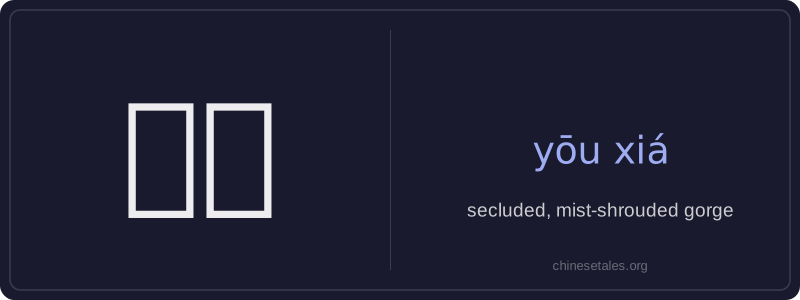
‘幽峡’ literally combines 幽 (yōu), meaning ‘secluded,’ ‘quiet,’ ‘deep,’ or ‘mystical,’ and 峡 (xiá), meaning ‘gorge’ or ‘canyon.’ Together, they evoke a narrow mountain valley that is remote, shaded, often shrouded in mist or soft light, and imbued with quiet natural beauty. It’s not just any gorge—it suggests tranquility, seclusion, and poetic atmosphere, frequently found in classical Chinese poetry, travel writing, or landscape descriptions.
This term carries an elegant, literary tone and is rarely used in casual speech. It appears most often in descriptive contexts—such as travel brochures, nature documentaries, or literary fiction—to emphasize the serene, almost otherworldly quality of a gorge. While geographically accurate, 幽峡 prioritizes aesthetic and emotional resonance over technical geography, evoking stillness, mystery, and harmony with nature.
Example Sentences
Related Words
国语
‘Guó yǔ’ literally means 'national language'—
无论谁
‘无论谁’ (wú lùn shéi) is a pronoun meaning
外语
‘外语’ literally means ‘outside language’ —
我的
我的 (wǒ de) is a possessive pronoun meaning 'my'
不对
不对 (bù duì) literally combines 不 (bù), meani
违规
违规 (wéi guī) literally means 'to violate rules
亲笔
‘亲笔’ literally means ‘one’s own hand’—comb
面条
‘面条’ (miàn tiáo) literally means ‘flour str