Word Explanation
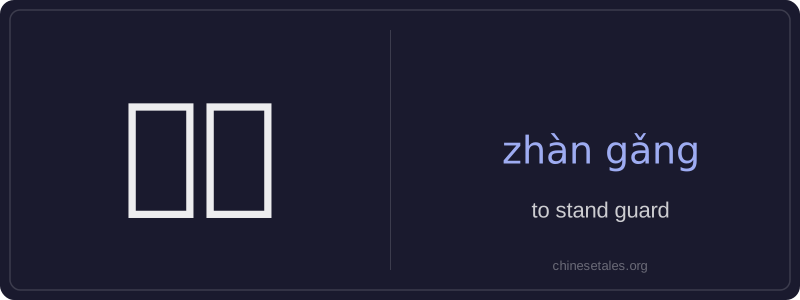
‘站岗’ literally means ‘to stand at a post’ — ‘站’ (zhàn) means ‘to stand’, and ‘岗’ (gǎng) refers to a guard post, duty station, or watch position. Together, they form a verb meaning ‘to stand guard’ — performing sentry duty by maintaining a fixed, vigilant posture at a designated location. It emphasizes physical presence, alertness, and responsibility, often in formal or institutional contexts such as military bases, government buildings, school entrances, or security checkpoints.
The term carries connotations of discipline, duty, and vigilance. While it can describe actual military or police duty, it’s also used figuratively — for example, parents ‘standing guard’ over children during playtime, or volunteers ‘standing guard’ at community events. It is not used for casual watching (e.g., watching TV), nor does it imply movement or patrolling; that would be ‘巡逻’ (xún luó). The compound is typically used in the present or future tense, or as a verbal phrase following modal verbs like ‘要’ or ‘正在’.
Example Sentences
Related Words
国语
‘Guó yǔ’ literally means 'national language'—
无论谁
‘无论谁’ (wú lùn shéi) is a pronoun meaning
外语
‘外语’ literally means ‘outside language’ —
我的
我的 (wǒ de) is a possessive pronoun meaning 'my'
不对
不对 (bù duì) literally combines 不 (bù), meani
违规
违规 (wéi guī) literally means 'to violate rules
亲笔
‘亲笔’ literally means ‘one’s own hand’—comb
面条
‘面条’ (miàn tiáo) literally means ‘flour str