Word Explanation
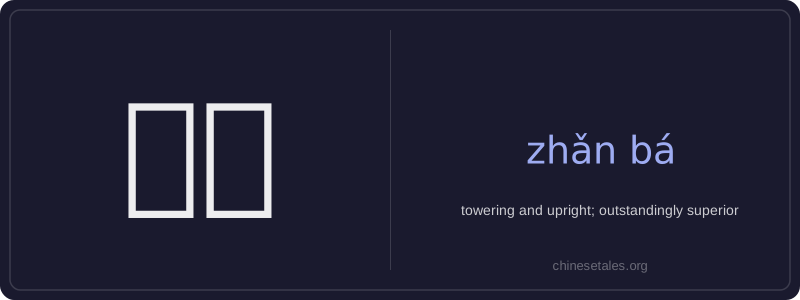
'Zhǎn bá' (崭拔) is a literary, two-character adjective describing something that rises powerfully and elegantly—like a mountain peak piercing the clouds or a tall pine tree standing proudly above the forest. The first character 崭 (zhǎn) conveys 'new, sharp, towering,' suggesting striking height and freshness; the second 拔 (bá) means 'to pull up, to rise abruptly,' emphasizing upward thrust and prominence. Together, they evoke an image of natural grandeur and dignified superiority.
This term is rarely used in everyday speech but appears frequently in classical poetry, landscape descriptions, and formal writing—especially when praising resilient, majestic plants or architectural features. It carries a positive, almost heroic connotation: not just tall, but impressively upright and exceptional among peers. While it can describe people metaphorically (e.g., a gifted scholar), its most common and natural usage is with trees, mountains, or towers—objects that physically soar and symbolize excellence through vertical strength.
Example Sentences
Related Words
国语
‘Guó yǔ’ literally means 'national language'—
无论谁
‘无论谁’ (wú lùn shéi) is a pronoun meaning
外语
‘外语’ literally means ‘outside language’ —
我的
我的 (wǒ de) is a possessive pronoun meaning 'my'
不对
不对 (bù duì) literally combines 不 (bù), meani
违规
违规 (wéi guī) literally means 'to violate rules
亲笔
‘亲笔’ literally means ‘one’s own hand’—comb
面条
‘面条’ (miàn tiáo) literally means ‘flour str