Word Explanation
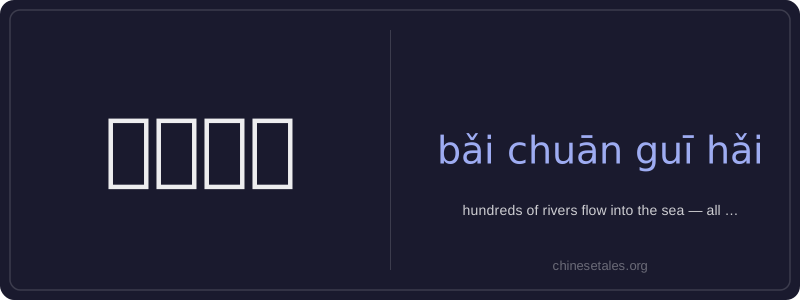
‘Bǎi chuān guī hǎi’ literally means ‘hundreds of rivers flow into the sea,’ and figuratively expresses the idea that diverse elements, paths, or efforts ultimately converge toward a single goal, origin, or outcome. The four characters combine to evoke a natural, inevitable process: ‘bǎi’ (hundred) suggests multiplicity; ‘chuān’ (rivers) symbolizes separate flows or sources; ‘guī’ (return/flow into) indicates direction and unity; and ‘hǎi’ (sea) represents the ultimate destination or unifying whole.
This idiom is commonly used in formal writing, speeches, and philosophical or historical discussions to describe convergence—whether of ideas, cultures, talents, or historical trends. It carries a positive, harmonious connotation, emphasizing natural order and shared purpose rather than forced uniformity. While rooted in geography, it’s rarely used to describe actual hydrology; instead, it functions as a literary metaphor for unity in diversity, often evoking classical Chinese cosmology where water symbolizes the Dao or the natural course of things.
Example Sentences
Related Words
国语
‘Guó yǔ’ literally means 'national language'—
无论谁
‘无论谁’ (wú lùn shéi) is a pronoun meaning
外语
‘外语’ literally means ‘outside language’ —
我的
我的 (wǒ de) is a possessive pronoun meaning 'my'
不对
不对 (bù duì) literally combines 不 (bù), meani
违规
违规 (wéi guī) literally means 'to violate rules
亲笔
‘亲笔’ literally means ‘one’s own hand’—comb
面条
‘面条’ (miàn tiáo) literally means ‘flour str