Word Explanation
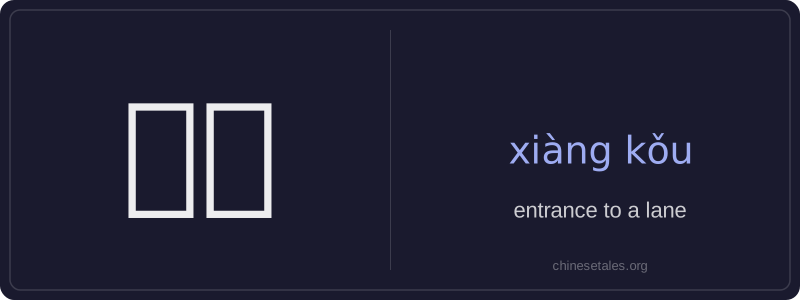
‘巷口’ literally means 'lane mouth'—a compound noun formed by combining 巷 (xiàng), meaning 'narrow lane' or 'alley', and 口 (kǒu), meaning 'mouth' or 'entrance'. In Chinese, 口 is often used metaphorically to denote an opening or access point, so 巷口 specifically refers to the entrance or opening of a narrow urban lane—typically where it meets a larger street. It evokes a vivid, localized sense of place common in older residential neighborhoods, especially in cities like Beijing, Shanghai, or Suzhou.
This word carries a subtle sense of intimacy and familiarity—it’s not just a physical location but often implies a social threshold: where neighbors greet each other, children play, or vendors set up stalls. Unlike broader terms like 街口 (jiē kǒu, 'street corner'), 巷口 suggests a quieter, more enclosed space, often with historical or cultural resonance in literature and film depicting everyday life in traditional Chinese communities.
Example Sentences
Related Words
国语
‘Guó yǔ’ literally means 'national language'—
无论谁
‘无论谁’ (wú lùn shéi) is a pronoun meaning
不对
不对 (bù duì) literally combines 不 (bù), meani
外语
‘外语’ literally means ‘outside language’ —
我的
我的 (wǒ de) is a possessive pronoun meaning 'my'
违规
违规 (wéi guī) literally means 'to violate rules
亲笔
‘亲笔’ literally means ‘one’s own hand’—comb
面条
‘面条’ (miàn tiáo) literally means ‘flour str