Word Explanation
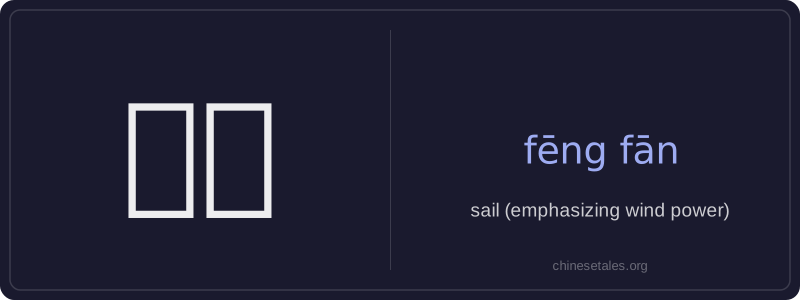
风帆 literally means 'wind sail' — 风 (fēng) means 'wind', and 帆 (fān) means 'sail'. Together, they refer specifically to a sail that harnesses wind power to propel a boat or ship. Unlike the general term 帆 (fān), which can refer to any sail (including modern non-wind-powered ones in metaphorical usage), 风帆 emphasizes the traditional, wind-dependent function and often evokes imagery of sailing vessels, yachts, or historical maritime travel.
This word is commonly used in descriptive, literary, or nautical contexts — for example, when talking about sailing sports, coastal scenery, or poetic metaphors involving movement, freedom, or journeying. It appears frequently in travel writing, marine education, and cultural discussions about seafaring heritage. While not everyday conversational vocabulary, it’s widely understood and carries a slightly elegant or nostalgic tone.
Example Sentences
Related Words
国语
‘Guó yǔ’ literally means 'national language'—
无论谁
‘无论谁’ (wú lùn shéi) is a pronoun meaning
不对
不对 (bù duì) literally combines 不 (bù), meani
外语
‘外语’ literally means ‘outside language’ —
我的
我的 (wǒ de) is a possessive pronoun meaning 'my'
违规
违规 (wéi guī) literally means 'to violate rules
亲笔
‘亲笔’ literally means ‘one’s own hand’—comb
面条
‘面条’ (miàn tiáo) literally means ‘flour str