Word Explanation
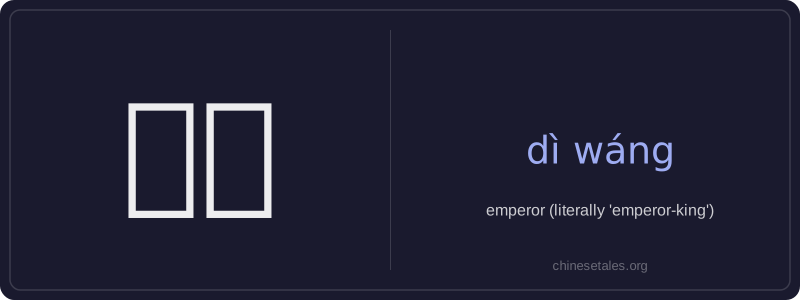
‘帝王’ (dì wáng) is a compound noun meaning ‘emperor’ — the supreme sovereign ruler of a historical Chinese empire. It combines two characters: 帝 (dì), which originally referred to a divine or heavenly sovereign (often used for legendary or mythological rulers like the Yellow Emperor), and 王 (wáng), meaning ‘king’ or ‘monarch’. Together, they form a formal, literary term emphasizing absolute imperial authority and legitimacy, often evoking China’s pre-modern dynastic era.
This word is primarily used in historical, literary, or academic contexts — such as textbooks, documentaries, historical novels, or museum exhibits — rather than everyday speech. While modern Mandarin typically uses 皇帝 (huángdì) for ‘emperor’, 帝王 carries a more classical, elevated, or poetic tone, sometimes suggesting grandeur, tradition, or moral weight. It may also appear in idioms or fixed phrases like 帝王之术 (‘the art of rulership’) or 帝王气象 (‘imperial bearing’).
Example Sentences
Related Words
国语
‘Guó yǔ’ literally means 'national language'—
无论谁
‘无论谁’ (wú lùn shéi) is a pronoun meaning
不对
不对 (bù duì) literally combines 不 (bù), meani
外语
‘外语’ literally means ‘outside language’ —
我的
我的 (wǒ de) is a possessive pronoun meaning 'my'
违规
违规 (wéi guī) literally means 'to violate rules
亲笔
‘亲笔’ literally means ‘one’s own hand’—comb
面条
‘面条’ (miàn tiáo) literally means ‘flour str