Word Explanation
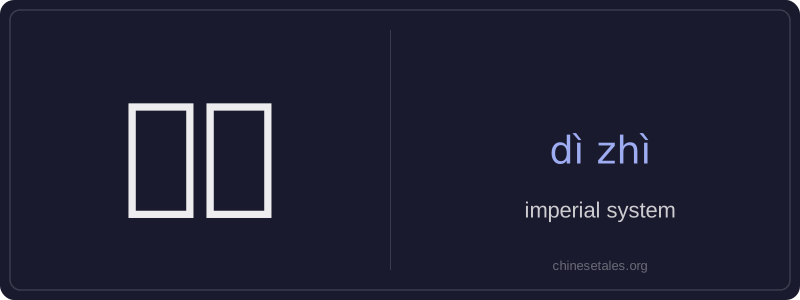
‘帝制’ (dì zhì) literally combines 帝 (dì), meaning ‘emperor’ or ‘imperial’, and 制 (zhì), meaning ‘system’, ‘institution’, or ‘regime’. Together, it refers specifically to the political system in which a hereditary emperor holds supreme authority — the imperial system. Historically, this term is most closely associated with China’s dynastic eras, especially from the Qin dynasty (221 BCE) until the fall of the Qing dynasty in 1912.
While ‘帝制’ is a formal, historical term, it appears in academic, journalistic, and literary contexts when discussing pre-modern governance, constitutional debates, or comparisons with republicanism. It carries strong connotations of centralized monarchy, ritual hierarchy, and dynastic legitimacy. Unlike the more general term ‘monarchy’, 帝制 emphasizes the uniquely Chinese institutional framework — including the Mandate of Heaven, imperial bureaucracy, and court rituals — rather than European-style kingship.
Example Sentences
Related Words
国语
‘Guó yǔ’ literally means 'national language'—
无论谁
‘无论谁’ (wú lùn shéi) is a pronoun meaning
不对
不对 (bù duì) literally combines 不 (bù), meani
外语
‘外语’ literally means ‘outside language’ —
我的
我的 (wǒ de) is a possessive pronoun meaning 'my'
违规
违规 (wéi guī) literally means 'to violate rules
亲笔
‘亲笔’ literally means ‘one’s own hand’—comb
面条
‘面条’ (miàn tiáo) literally means ‘flour str