Word Explanation
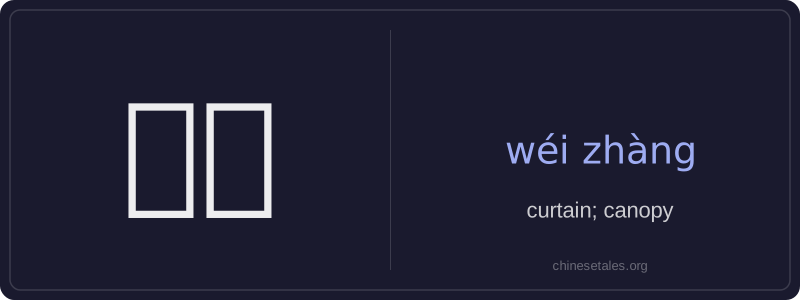
‘帷帐’ (wéi zhàng) is a literary or formal noun meaning ‘curtain’ or ‘canopy’—especially one used for enclosure, privacy, or ceremonial purposes. The character 帷 (wéi) originally referred to a hanging cloth screen or drape, often made of silk, while 帐 (zhàng) means ‘tent’ or ‘canopy’, evoking shelter and enclosure. Together, they emphasize a draped, fabric-based barrier or covering, typically larger and more ornate than ordinary curtains.
This term appears frequently in classical Chinese literature, historical dramas, and formal descriptions of architecture or interiors—such as palace chambers, ancestral halls, or traditional wedding settings. It carries connotations of elegance, seclusion, or ritual significance, and is rarely used for modern, everyday window curtains (for which 窗帘 is standard). In contemporary usage, it’s mostly found in written contexts, poetry, or when evoking an ancient or solemn atmosphere.
Example Sentences
Related Words
国语
‘Guó yǔ’ literally means 'national language'—
无论谁
‘无论谁’ (wú lùn shéi) is a pronoun meaning
不对
不对 (bù duì) literally combines 不 (bù), meani
外语
‘外语’ literally means ‘outside language’ —
我的
我的 (wǒ de) is a possessive pronoun meaning 'my'
违规
违规 (wéi guī) literally means 'to violate rules
亲笔
‘亲笔’ literally means ‘one’s own hand’—comb
面条
‘面条’ (miàn tiáo) literally means ‘flour str