Word Explanation
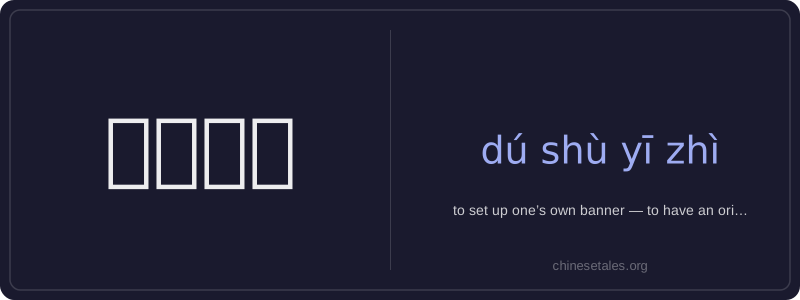
‘Dú shù yī zhì’ literally means ‘to set up one’s own banner alone’ — a vivid metaphor from ancient Chinese military practice, where each army displayed its unique banner to signal identity and independence. The four characters combine to express standing apart through originality: 独 (alone), 树 (to erect or establish), 一 (a single, unique), and 帜 (banner or standard). It emphasizes deliberate, confident distinction rather than mere difference.
This idiom is used almost exclusively to praise distinctive style, innovation, or principled independence — especially in arts, scholarship, business, or leadership. It carries positive, respectful connotations and implies both creativity and self-assurance. Unlike neutral terms for ‘different’, it suggests intentional, admirable uniqueness backed by substance — not eccentricity for its own sake. It’s common in formal writing, critiques, and speeches, but rare in casual speech.
Example Sentences
Related Words
国语
‘Guó yǔ’ literally means 'national language'—
无论谁
‘无论谁’ (wú lùn shéi) is a pronoun meaning
不对
不对 (bù duì) literally combines 不 (bù), meani
外语
‘外语’ literally means ‘outside language’ —
我的
我的 (wǒ de) is a possessive pronoun meaning 'my'
违规
违规 (wéi guī) literally means 'to violate rules
亲笔
‘亲笔’ literally means ‘one’s own hand’—comb
面条
‘面条’ (miàn tiáo) literally means ‘flour str