Word Explanation
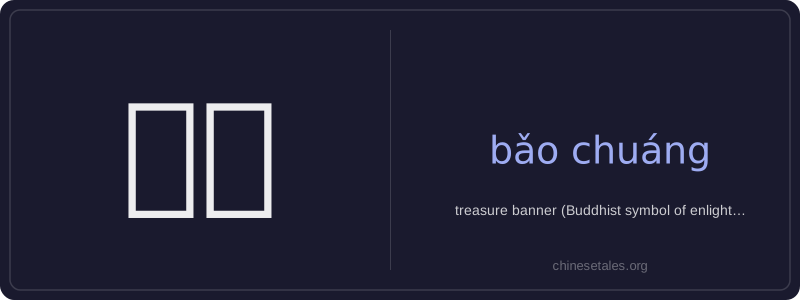
‘宝幢’ (bǎo chuáng) is a Buddhist ceremonial banner symbolizing wisdom, protection, and the triumph of enlightenment over ignorance. The first character 宝 (bǎo) means 'treasure' or 'precious thing', conveying sacred value and spiritual wealth; the second character 幢 (chuáng) refers to a tall, cylindrical banner or standard, often made of silk or brocade and mounted on a pole. Together, they denote a ritual object used in temples and ceremonies—typically adorned with mantras, auspicious symbols, or images of Buddhas and bodhisattvas.
This term appears primarily in religious, historical, and artistic contexts—not in everyday speech. It may be seen in temple descriptions, sutra translations, classical poetry, or cultural heritage documentation. While visually similar to secular banners, the ‘treasure banner’ carries deep doctrinal significance: it represents the unshakable nature of truth and the spreading of Dharma. Its use implies reverence and formality, and it is rarely encountered outside Buddhist literature or temple architecture.
Example Sentences
Related Words
国语
‘Guó yǔ’ literally means 'national language'—
无论谁
‘无论谁’ (wú lùn shéi) is a pronoun meaning
不对
不对 (bù duì) literally combines 不 (bù), meani
外语
‘外语’ literally means ‘outside language’ —
我的
我的 (wǒ de) is a possessive pronoun meaning 'my'
违规
违规 (wéi guī) literally means 'to violate rules
亲笔
‘亲笔’ literally means ‘one’s own hand’—comb
面条
‘面条’ (miàn tiáo) literally means ‘flour str