Word Explanation
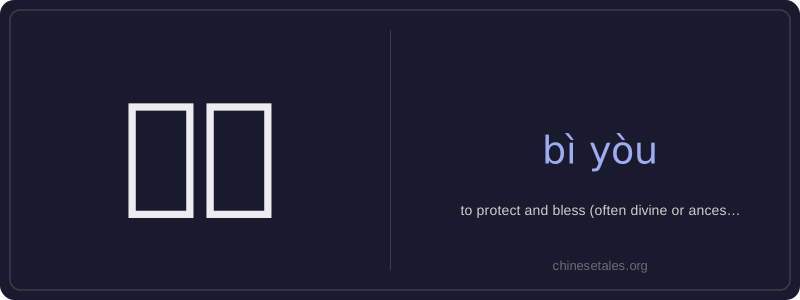
‘庇佑’ is a formal, literary verb meaning ‘to protect and bless,’ typically used in religious, spiritual, or ancestral contexts. It combines two characters with overlapping but complementary meanings: 庇 (bì) means ‘to shelter’ or ‘to shield,’ often from harm or danger, while 佑 (yòu) means ‘to assist’ or ‘to bless,’ especially by divine or supernatural forces. Together, they convey a sense of benevolent, authoritative protection—like that offered by gods, deities, ancestors, or revered sages.
The word carries strong connotations of reverence and gratitude. It appears frequently in temple inscriptions, prayers, classical texts, and ceremonial language—for example, when thanking Guanyin for safeguarding a family or invoking ancestral spirits to watch over descendants. It is rarely used in casual speech or modern secular contexts, and never for mundane, human-only protection (e.g., a bodyguard would not ‘庇佑’ someone). Its tone is solemn and respectful, often paired with subjects like 天神 (heavenly deities), 祖先 (ancestors), or 佛祖 (the Buddha).
Example Sentences
Related Words
国语
‘Guó yǔ’ literally means 'national language'—
无论谁
‘无论谁’ (wú lùn shéi) is a pronoun meaning
不对
不对 (bù duì) literally combines 不 (bù), meani
外语
‘外语’ literally means ‘outside language’ —
我的
我的 (wǒ de) is a possessive pronoun meaning 'my'
违规
违规 (wéi guī) literally means 'to violate rules
亲笔
‘亲笔’ literally means ‘one’s own hand’—comb
面条
‘面条’ (miàn tiáo) literally means ‘flour str